Showing posts with label Kindle. Show all posts

Monday, August 02, 2010

New Kindles

Black Graphite is the New White Plastic

The coolest thing to happen last week is probably the one thing I shouldn't talk terribly much about: the new Kindles. I'm just going to go on record that I work no where near anyone on the Kindle team and I have no knowledge of how that business operates or its strategy. Independent of being an Amazonian, I'm finally really excited about the Kindle now. I was definitely very skeptical when it first came out and was concerned when the iPad came out at its competitive price point. Though it's a totally different device, the comparisons are inevitable because of the form factor. Anyone who says reading a book is better on the iPad than the Kindle is definitely an Apple fanboy - it's technologically superior for reading plain text. At $139 for the entry WiFi model, it's finally at a price point fitting of a standalone book reader, and features better battery life (up to a month now), faster page turns, and better contrast ratio than the previous generation. I believe the reason for the switch to black graphite is probably because that makes it easier to read in sunlight, but you can still get it in white for the 3G model at $189.

I'm really curious now to see how Barnes and Noble will respond. Now that the Kindle has a model at $60 less and also available in-person at Target stores, the Nook is quickly losing what competitive advantage it had. Still, with e-Book sales outpacing physical book sales, there's gotta be enough to go around, but how big a piece of the pie will Apple and Barnes and Noble get compared to Amazon?

Ballmer is an Idiot

Steve Ballmer is really pissing me off nowadays. Ever since he's taken over, he's made many terrible decisions, including killing the Courier. This was the super creative tablet that Microsoft was working on that Ballmer decided to cut. Now he admits that the iPad is their number one threat and they need to compete with it. It's frustrating that he had a product that stood a chance against the iPad and threw it away, and now they have little hope of taking on the iPad. Microsoft has gone from being known for innovation to being way behind on market trends. Instead of trying to create another iPad now, why don't they either resurrect the Courier or invest in something totally different?

Windows Phone 7 and Free Bumpers


A lot of interesting stuff has been going on in cell phones. Ars Technica has a really good preview of Windows Phone 7 going in great depth into some nice UI touches and little nuggets of their impressions, like the keyboard being on par with the iPhone keyboard. Still, it's clear that there are a lot of question marks to be filled in. How well will the Xbox Live integration work? Will developers give the platform a shot? Given that someone leaked Microsoft's internal announcement to give all employees a Windows Phone 7 device, it's clear that Microsoft is definitely serious about the platform, so we just have to hope that it will all come together in the end.

I'm a little late on this since I missed last week's post, but Apple finally decided to respond to all the negative coverage of its iPhone antenna woes by giving away the bumpers that pretty much solve the issue. I have to bring up something that Molly Wood and others were predicting at CNet before this event happened: Apple never owned up to a problem and instead spoke at great length about how the problem had been overblown. It's definitely a smart strategy because it makes them look like they've been bullied into having to do this free bumper thing even though it's clear they had to know about the issue to create this case, which they hadn't done for any previous iPhone. In any case, it's great that they're doing the right thing now, but if they're only doing so until September 30 I wonder if they've figured out a hardware fix for the issue so that future batches won't have the issue?

Google has finally killed the Nexus One. Google has proved that people don't want a phone they can't play with at a store, even if it is a somewhat compelling product. It will still be sold abroad, but no more for US consumers.

Ars Technica has a ridiculously detailed review of the Droid X, and it seems like probably the best phone Motorola has put out in a while. Still, the UI seems to fall short of the Droid Incredible in visual flare. Plus, at a screen size rivaling the Dell Streak you have to wonder if anyone wants something that big in their pocket. There is such a thing as too big for a smartphone.

WPA2 Hole Discovered

WPA2 has finally been cracked - kinda. It was only a matter of time before a hole was discovered, and it doesn't render the standard useless but does damage it for enterprise use. It turns out that the standard's language allows for an authorized user on the network to send malicious packets to others on the network as well as sniff the packets of others. For most people, this probably isn't such a big deal, but could be worse for business use. The problem with fixing it is that all implementers would have to fix it, and it's unlikely to organize something like that. The next best bet would be a revision to WPA2, but there doesn't appear to be language in the standard to support something like that. It's a rather interesting conundrum.

Also in security news recently, Apple was deemed the company with the most security vulnerabilities in its software. So much for their claims of having the safest platform. The issues weren't in OS X, but rather in other ancillary products. Still, it helps debunk the claim that you can ignore security just because you have a Mac.

Funny Videos

I missed this a while back, but the guy who posted his customer service cartoon ranting about iPhone fanboys also posted one sticking it to Android fanboys. It's almost as hilarious.

In an example of social media marketing gone right, the Old Spice marketing guys decided to create a bunch of videos with Isaiah Mustafa responding to people on Twitter with short videos, including Alyssa Milano. They did a pretty awesome job.

Final Notes

I'm out of time, but here are a few other stories I found worthwhile.

Gawker has a funny post on the stupidest things caught on video that people said about the Internet, including the infamous Al Gore quote on his greatest invention. You may recognize certain terminology sourced from some of the videos.

I've seen reports off and on recently about issues with cell phone manufacturers and building screens, and it looks like HTC has had enough issues with AMOLED that they've decided to move to Super LCD for these devices. AMOLED hit the market a few years back and was quite impressive, but apparently still not easy to make.

If you're wondering what to load on your Android phone, PC Mag has you covered. Makes me a little envious on a few of those, I have to admit.

YouTube has increased their upload limit to 15 minutes, so now you can post longer useless videos.

If you want to see a real ninja badge, you have to check this out.

iPhone jailbreaking is now legal!

Hope everyone has an excellent start to their August.

Tuesday, February 09, 2010

Gone Phishing on the iPhone

Cybersecurity Shmybersecurity

There was a pretty good amount of security news last week but not much of anything else. Given that I'm kind of tired from yesterday (worked all day and night), I'm going to keep this kind of short since it was a slow news week anyway.

Network World kind of informally posted what they think the 10 best IT jobs will be in 2010. I don't know that they had hard evidence to back their list, but it's actually a pretty good list. Guess what's at the top of that list? No, not a shmybersecurity expert but a security specialist. The list has some other cool choices, like open source evangelist and service assurance manager (super important), but let's stick with security specialist.

Almost every week for the past several months I've had at least one security issue a week to talk about. Sometimes I don't cover them just because they get repetitive. Last week alone there were two biggies. Google was at the center of a corporate espionage attack a couple of weeks ago and so last week they teamed up with the NSA to get to the bottom of the attack, which is believed to have originated in China. It was so serious that Google decided that they're not going to filter search results in China anymore. I'm not sure if they've stuck with this policy or not since then, but they were clearly frazzled by this. Given that the accounts violated were active human rights supporters in China, it's very likely that the attacks originated within the Chinese government.

More recent than that was that a security flaw was discovered in the iPhone opening the door to phishing attacks. I wonder if this will make security on the iPhone a big deal like it is for Internet Explorer on PCs? It basically allows someone to easily modify your mobile configuration files over the air and make it look like it came from Apple. Someone who didn't know about this exploit could do something like connect to a malicious server instead of a VPN and have all their transmissions compromised.

With all these stories cropping up, it's not surprising that a security specialist would be in demand. Coming full circle back to this section header, a lot of people don't understand cybersecurity at all. However, it's not easy to understand if you want to be safe from every kind of attack you're likely to come across. Even the tech savvy get tricked. It's an arms race because the bad guys get more and more clever as we figure them out - like a polymorphic virus. I don't know if it will pan out since often things don't in a government as complicated as ours, but the House has approved legislation to authorize the NIST to develop a cybersecurity education program. This would be not only for the government but also for businesses and consumers to make our economy stronger against security scares. I hope that it ends up leading to real results, because it's something that we've needed for a long time now.

Superbowl Ads

Internet video has gotten really big. It's exciting. I remember blogging about IP TV a few years back and looking forward to a future where people control what they watch and have a much larger platform of content in the Internet. We're not quite there yet, but it's promising that 178 million US Internet users watched 33 billion online videos in December. It's crazy that 40% of those videos were on YouTube and 3% was on Hulu, which was the next highest percentage. The times have really changed from a world where the Internet wasn't a big deal and no one was using much of their bandwidth unless they were pirating stuff.

Anyway, it's cool that I could turn to Hulu for Superbowl ads since I missed the game. A couple of my friends had planned on doing that since they don't like football (I know, blasphemy). Hulu did this last year, too, but I think they improved this year with showing you how much people liked each video (at least I think that's new). I had the game on in the background and actually managed to catch the really good ads live because they happened to catch my attention. My favorites were definitely the eTrade one, the Doritos House Rules one, and the Megan Fox one. Honorable mentions though to Snickers and the Doritos Underdog one. Jeers to Prince of Persia (stop embarrassing good video game franchises, please) and The Backup Plan. Am I crazy or were the movie trailers last Superbowl much better? This year also saw Google's first Superbowl ad, and it was creative.

Let eBooks Grow

I don't want to talk to this too much since I have a vested interest in Amazon (I assure you that I have 0 insider knowledge on this thing), but I have something to say.

A part of me is stupefied by how book publishers are dealing with eBooks, but a part of me is glad because it's exposing them for the inane people they are. Amazon is selling eBooks from HarperCollins, for example, for less they pay HarperCollins and now Rupert Murdoch is bemoaning the death of paper books and wants to force prices of eBooks up like Macmillan does. When is this guy going to retire? He's so out-of-date he probably etches his notes on stone tablets. This is the same guy who didn't want Google indexing his news articles, mind you, because he can't see the writing on the wall. Book publishers have gotten away with over-charging people for books and under-paying authors for too long and these arguments with Amazon are only surfacing how shady they can be. I don't understand what's so wrong with trying to sell eBooks for less money than a physical version. It's all profit as a digital copy! First they didn't want a computerized voice reading their books on the Kindle, and now Amazon is offering them a better revenue split at the $10 price point but they're still recalcitrant! Whether they like it or not, paper books as we know them aren't going to last forever. I know you're clutching your copy of Catcher in the Rye and staring blankly at the screen but it's true! We don't even live in a world anymore where everyone reads newspapers on paper.

Ok, stepping off my soapbox. Thanks for indulging me.

Last Notes

Just a couple of items before I sign off here.

This is a really fun article about 18 gadgets that used to be high-tech. It's so enlightening sometimes to think about the past and how far we've come and how we got here.

The CEO of Sun resigned following the heels of their acquisition by Oracle. Kind of sad that Sun has fallen so far from grace, but it happens. At least he resigned in style via haiku.

Are relational databases dying? Very interesting thoughts from Computer World.

Enjoy the sunny weather outside while you can! I'll see you next week. Same bat time, same bat channel.

Tuesday, February 02, 2010

The Apple iPlop

The iPad

I don't know how many years it's been since we've had rumors of an Apple tablet. When people saw the Modbook - OS X running on external tablet hardware - I think that really fueled the fire. I never really thought it'd be more than a giant iPhone given how much Apple had invested in the iPhone, and it looks like I was right. Instead of a Mac-based tablet we got an iPad. Engadget did their normal great job of liveblogging the whole event, but it was all about the iPad. It's funny because when you look through the pictures and read about the iPad it actually sounds pretty good. I'm sure seeing Steve Jobs demo it made it even more enticing. However, it's not long afterwards that you start to realize what's wrong with it.


In case you've been living under a rock: the iPad is literally almost just a big iPhone at about 9.5" x 7.5". It can do everything an iPhone can, other than make calls (or send texts), take pictures, or take videos, but it can show you eBooks natively, comes with iWork, and supports painting. Some of the other native apps are a bit varied from what you'd see on the iPhone but just to take advantage of the larger size. I don't think it's bad at anything that it does, but at $500 it's too expensive for the need people don't have for it. It's more or less a toy device for people who already have an iPhone since it's limited by the Apple App Store. You can see some videos of it in action here.

I figured that everyone else would be drooling over it, but not so much. At least not among the tech journalists. I think it's a neat niche product that will sell a few units, but it won't be a smash hit with this many people disappointed almost to the point of being offended by it. It has plenty of things wrong with it. It's locked to the Apple App Store, there's no HDMI, still no support for Flash (supposedly because it's buggy), and you can't really multitask. On the plus side, it's fast and it does has affordable data plans starting at $30 a month. Oddly enough, they partnered with AT&T again for the data service, which may be just that AT&T gave them the best deal. Plus, AT&T has a more widespread WiFi network than Verizon.

I wonder if this will end up being the nail in the coffin for the tablet PC? It's a niche market that has never taken off and maybe it's a product that's cooler to think about than actually develop? Or maybe it's still ahead of its time? If there was an iPod or iPhone of tablets though, I don't think anyone is going to look back on he iPad and consider it that thing. I think if it was $300 cheaper it would be a really awesome device, but at $500 it keeps it out of reach of the average person. We'll have to see when it comes out if people forget its negatives and buy it anyway. Until then, if you watch one parody video you should definitely watch College Humor's.

CES 2010

I missed out on CES being in India, but if you missed out also then it's never too late to catch up. I don't think there was a lot of really impressive stuff, but Robert Scoble put up a pretty impressive roundup of the biggest articles around CES. One of the more high profile announcements was Microsoft's tablet, which was seen as a flop, as well. Microsoft keeps trying to build tablets without carefully thinking about what the user interface should be like.

The coolest thing I saw was the Palm Pre Plus and Pixi Plus coming to Verizon (just a week ago, actually), which feature tethering in addition to more RAM and more on-board flash memory. With the new webOS coming out next month though all Pres and Pixis will get video recording, video editing, and Flash support. This will either support Apple's criticism of Flash or debunk them. The new webOS update is coming later this month.

Apps on the Kindle

Amazon recently announced an SDK for the Kindle to allow for third-party apps on the Kindle. Some people have criticized the Kindle as being a one-trick pony (even though it does do that one trick very well), so this touches on that a bit. I think it'll be neat for really simple applications, like word games and restaurant guides and stuff. It's not the reason you'd get a Kindle, but I'd file it away in the "nice to have" category.

Firefox 3.6

We now have Firefox 3.6, which has HTML 5 support, form auto-completion (like entire forms, not just individual fields), personas, and significant performance improvements. It's still not at Chrome's level yet, but I'm glad that they're at least trying to close the gap.

Ready for 3-D?

Digital Trends put up an article that I wanted to talk about because it's an issue that keeps coming up: do we really need 3-D TVs? Will they sell? Well, as I understand it, it's not very expensive to add to TVs (at least the kind where you need to put on 3-D glasses) but helps drive sales to buying new TVs for folks who don't have high definition yet and just needed that one more reason to upgrade. In reality, it'll still be at least another couple of years before people actually seek out 3-D TVs. The content just isn't there, which I think makes sense. Why invest in 3-D content if no one can view it? That would be like creating a bunch of HD channels when no one has an HD TV. HD TVs didn't make a whole lot of sense when they first came out but it wasn't long before they did become useful. I think we'll see the same with 3-D, we just haven't reached the point yet where it's really desirable.

Quickies

I'm surprisingly exhausted so I need to end this post rather quickly and pass out. Here's some quick last notes.

Secretary of State Hilary Clinton (still weird to say that) is taking a hard stance for cybersecurity and the free flow of information. This supports Google's decision to stop censoring their Chinese site and tries to combat censorship in other countries as well. It may be a little overreaching, but it is important for the portion that seeks to punish those who do hack the United States military.

Samsung threw its hat in the e-Reader game. It doesn't impress me, but it's just YAER (yet another e-reader).

After a long courtship, Oracle now owns Sun, he creators of Java among other things. In other news, Oracle is slowly taking over the world (it wasn't long ago that they acquired Linksys).

If you want to know how secure the identity of your browser is, this is a really cool tool to find out.

Have a great week, everyone!

Sunday, May 17, 2009

Why the Kindle is the Future of Reading

My Two Cents on the Kindle

Disclaimer: I have no non-public information on the Kindle. I don't even work in the same building as those folks. The following are just my own opinions and do not reflect the opinions of Amazon.com or any of its employees or partners.

I was walking home from the gym a few days ago and was listening to Buzz Out Loud bash the Kindle DX when I reached an epiphany that may be obvious but I wanted to share it anyway: the Kindle is ridiculously forward thinking and will most likely be the future of reading.
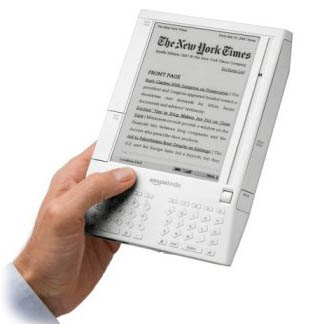
I've read several articles and heard multiple podcasts bash the Kindle, and I'm pretty tired of it. I don't own a Kindle, but playing with it for a bit was enough to sell me on it. The first thing wrong with all these "pundits" writing off the Kindle is that they're often not the target audience. Not everyone loves reading, and that's ok. The Kindle is designed for people who love reading. It's not designed to be a super sexy gadget like the iPhone or the Pre or anything like that - it's meant to be as functional as possible. I feel like we've entered a world of gadgets where style taking precedence over substance helps sales, and it sells some reporters on the devices, as well. I don't want to discredit all people that review gadgets, that's just an observation I've made about some of them. I haven't heard anyone who has a Kindle and enjoys reading tell me that they hate it or regretted getting it.

The real point I want to make is that a lot of the best technology starts out unpopular. Do you know why MSN was so late to the game with it's Internet services and web portal? Because Microsoft thought that the Internet was a fad (it's pretty hard to find a citation for this, but he definitely said something to the effect of "The Internet? We're not interested in it"). When most people hear MSN now they probably think of MSNBC, whereas the ISP didn't do all that hot (competing with the likes of AOL and Earthlink) and the web portal never caught up to Yahoo, which never caught up to Google, and the rest is history (although MSN is still around). Nowadays, the odds are slim to none that you'll go through your day without directly or indirectly interacting with the Internet. Our lives basically revolve around it, but I'll get back to this point.

There are a couple of other great examples of technologies that people mocked early on. When Jeff Bezos invented e-Commerce in 1994 with Amazon.com, people thought he was out of his mind. Why would people want to buy stuff online they could drive to their store and get instantly? Why would you buy a book that you can't flip through in a bookstore? And yet, here Amazon stands as a formidable force in retail in the U.S. with a growing presence across the world. The people who doubted Jeff Bezos weren't stupid, they just weren't thinking ahead that far. The DVD format was seen as ridiculous since it required a new player and the discs cost more without a very big jump in quality as far as most people were concerned, and yet now almost every house has a DVD player. Heck, just a couple of years ago pundits thought that the iPhone was prohibitively expensive and no one would want to pay that much money for a smartphone without a keyboard. I think we all know what happened there.

The lesson to be learned here is that you can't believe what you hear in mainstream media - take it with a grain of salt. The common thread is that the doubters weren't forward thinking. The iPhone provided so much value and gave people such a rich experience that price just wasn't an issue to them. The Kindle is expensive, and yet people are still buying them. I don't need top secret information to know that - I see them outside on the bus and at the gym. Amazon sold out of them this past winter. If you don't want to believe that, you have to believe that 35% of sales on all books that have a Kindle edition are that Kindle edition. Books are the bedrock that Amazon.com was founded on, so 35% of a book's sales being for the Kindle is a pretty big deal. As much as all these journalists want to naysay, people aren't being deterred.


So why are people paying so much for a device that serves a single function? In a way, I think it serves a lot of functions. Not to sound like a broken record, but we live in an information society. Think about that for a second. The amount of knowledge we have available instantly at our fingertips has grown dramatically in the past couple of decades. I'd posit that people are actually becoming smarter because even though they haven't to remember less stuff overall since they can always just look it up, they also look up and learn more stuff because they can. We know names of random actors and actresses because of IMDB. Small underground artists are building worldwide fanbases through digital distribution. Let's face it, books aren't as portable as we'd like to think. If we want to read multiple books, we have to carry them in a bag. If you're a student - this really sucks (especially math and science texts). The Kindle not only lets you carry all these books in a thin, easy to carry package, but you can get leverage the Internet to get books directly onto it. Past that though, you can highlight and make notes without damaging the book, and you have more room than just the margins. Plus, you can define words you don't know on the fly (context clues don't always work), and having that kind of power for younger students can really encourage their thirst for knowledge.

If I'm not convincing you by now then maybe I'm just not explaining it right, but the Kindle is an improvement on a dying technology. People just don't have a whole lot of free time anymore. We wait around a lot, or ride public transit, or do other random things where we happened to be free, but it's not really free time. That's why carry mp3 players to fill that time. Books often lose the battle for our time because they're just not as convenient as carrying your iPod. If a Kindle is portable enough to carry to a gym, then it's portable enough for most anything. I fully understand that people love the feel of books, but people love the feel of CDs and yet they're still around while mp3s are popular. Why can't the same be true for books? I think books will die off in favor of digital copies some day, but that's a really long time from now. The Kindle may be a bit ahead of its time, but it's going to take a while for it to really catch on because an e-Reader is such a radical concept. Amazon has just done well because they have the online book store with access from where ever.

As for price: the first iPod and iPhone were expensive at first, too, but the price went down. Same with HD TVs, DVD players, personal computers, laptops, etc. It's going to be a while. For college students, the cost of a Kindle DX amortized over 4 years would easily be cheaper than real textbooks if the cost of these books were maybe half (even without the ability to re-sell books). For grade schools this could put a huge dent in their budgets if they could give each kid one of these and pay less for books (plus the drop in administrative costs if they could be managed remotely). The possibilities for education are really endless, and it's really a lot easier to study if your books are always with you in a portable device. I know I would've gotten more done.

Ok, I think I've gone on long enough. I hope that thoughts haven't been all that scattered, I just feel like I need to stand up for the Kindle because I honestly believe in it. I think that Amazon has been really smart so far in its diversification of not only its stores and acquisitions but also AWS, and I think that the Kindle is another key cog in its future (much like when Apple jumped into mp3 players and cell phones, which ended up re-vitalizing the Mac). The Kindle vision is "every book, every made, in any language, available in under 60 seconds". That vision is immensely inspiring. It feels pie in the sky, but it is possible. I think that alone should be enough to sell people on the idea of the Kindle being the future of reading. The idea of having the entirety of human knowledge available at your fingertips in under a minute is priceless. The Internet has taken us on that path, but it doesn't have the full text of every book every made in any language. The point I really want to get across is that we're at the forefront of an entirely new industry, much like digital music when Napster got big or the beginning of the end of broadcast television as we know it when Hulu came out - savor the moment. Don't buy into the hype and don't buy into the cynics, just be reasonable. That's all I ask.

Microsoft vs. Apple Ads

The advertising war between Microsoft and Apple is alive as well. It was pretty lopsided for a while, probably partially because Microsoft didn't want to seem like it was bullying an underdog, but Apple pushed too hard and woke the sleeping giant. The latest spin out of Redmond (aside from the commercials where people buy cheap PCs) is that it costs $30,000 to fill an iPod. The reason they can get around this with the Zune is that it's subscription-based, which has the advantage that for $15 a month you get all you can eat music plus you can keep 10 of them each month. Anyway, I still thought that this was kind of a stupid tactic from Microsoft, but meanwhile Apple came up with an attack that you couldn't get a PC without the stuff people hate about computers.

Which is a more ridiculous ad? The answer is that they're equally crazy. You may think that the Zune one is more dumb because most people already have a library of CDs and music to fill up their mp3 player with, but the Mac ad doesn't make any sense. Macs aren't as stable as people think they are - if you use certain software you will see crashes. I used iMovie for few months on a Mac Pro last spring and it crashed almost each time I used it. There are definitely security vulnerabilities for Macs, too, and it totally ignores the inflated price of a Mac. I'm not saying that Macs are bad computers, but these ads are slinging mud. They know that people won't fact check, but they're not quite slanderous so Apple can get away with them. My point is simply that when Microsoft comes up with ads like this Zune one, just remember who cast the first stone.

I have one more thing to slip in here: Google started airing a Google Chrome ad created internally by Google Japan just for fun. It's interesting that they care this much about Chrome (what's their master plan?) and that they're using a competing advertising venue to sell themselves.

Facebook's Funny Money

Ok so they don't really call it funny money, but I still can. Facebook is toying with an idea that's certainly not inventive, but it could definitely help them get on the track of a successful business model. They're testing a payments system with developers where virtual money can be used between applications to buy and sell virtual (or I suppose even physical) goods and services. It would make buying stuff easier and safer (like getting a wristband of money at a water park), and Facebook taking a cut of the transactions could help them replace/supplement their oft controversial advertising model with something less obtrusive. I don't really know if it'll work because I don't know if people will really trust Facebook with their money or want to buy what third party developers offer, but I'm definitely anxious to see what happens.

Meanwhile, their employees are going in the opposite direction: having imaginary money turned into real cash. Facebook has sought funding (to the tune of $150 million) from private investors to buy back their employees' stock to keep loyal employees around who have been chomping at the bit for a cut of the profits they were promised but haven't come to fruition quite yet. Won't people leave if they get rich off their stock? More importantly though, isn't this a dangerous financial decision? $150 million seems like a lot of money to bet if they don't come up with a good business model before their star burns out. I hope they know what they're doing.

Final Notes

Aside from being tired from today (didn't sleep enough last night), I think you're tired of reading this post by now (assuming that anyone is actually still reading this). Let me link you to a few other interesting tidbits before I send you on your merry way:

Google has launched a search options feature to try to get themselves closer to real-time search. They're actually pretty nifty.

The CEO of Sony Pictures admitted that he doesn't see anything good as having come from the Internet. You don't have to scroll up very far to get my opinions on the glory of the Internet, but it goes to show how backwards the movie industry can be and why licensing for TV shows and movies and their related properties is so wacky. If their CEO is living in the past then how can they hope to have a future?

The judge in the Pirate Bay trial has been under fire recently for having been involved in a pro-copyright association in Sweden (which he claims didn't bias him), but now they're starting to discover that his appointment may not have been random (as is supposed to be the case in Sweden). The plot thickens! Will it be called a mistrial?

Smashing Magazine has a really well-written article on how to optimize your website's conversion rates with usable designs, and it's full of pretty pictures. I love the concepts they point out here, and I think it's worth a read if you're interested in usability at all.

Coldplay is releasing their live album for free. Enjoy.

I hope you all have a great week! I think I'm going to spend my nights trying to learn how to play this.