Showing posts with label Apple. Show all posts

Tuesday, June 01, 2010

Apple Under Investigation

The DOJ Investigates Apple

Once again, we have a slow news week. And, once again, I'm slightly relieved because I've been busy getting ready to move to my new place.

The biggest story happens to be an Apple story: the US Department of Justice is investigating Apple for suspicion of anti-competitive activities. It has come out since that the initial impetus for thee investigation was Apple disallowing Flash on the iPhone, but it has since shifted to center around Apple's agreements with music publishers to deny music to Amazon MP3. One thing I know is true (this isn't insider information, I heard this outside of Amazon) is that Apple has leveraged iTunes to threaten some publishers out of being a part of Amazon's $5 album deals and other promotions. I'm not sure that all these things are illegal, but I certainly consider them somewhat unethical. Regardless, I'm anxious to learn what goes on behind the scenes. iTunes has retained fairly large market share in the face of Amazon MP3, which has a pretty large selection and is on several mobile platforms, including Android, and has been pretty aggressive with cross-product promotions to drive traffic to Amazon MP3.

It definitely looks like Adobe may have initially filed the complaint. If that's true, it seems really childish. I think Adobe is really fighting a losing battle with Apple - the more they antagonize Apple the more they're hurting their relationship. There's nothing anti-competitive about disallowing Flash on the iPhone because it's freely available on Macs and PCs - I don't know that Apple actually has a majority share in smartphones in the U.S., but definitely not worldwide.

You have to love the irony that Apple is basically following the Microsoft life cycle. They've been getting bigger and bigger with success that seems to have no end and massive market shares in their strong sectors, and are now likely to be embroiled in antitrust litigation.

Flash on Android

Meanwhile, what is Adobe really doing with Flash on mobile platforms? There's finally a beta for Android, but it doesn't even support Hulu still and only works on Froyo (Android 2.2) due to API requirements. It looks like the issue with Hulu is legal, but if you're going to release a mobile version of Flash that's only of partial use, then what's the point? The hype for mobile Flash is so old that I don't know who's going to care when (and if) it finally does come out. So far, the speed tests aren't impressive.

Dell Launches Streak

Why does Dell keep trying to making portable consumer electronics that aren't laptops? Their latest creation is the Streak tablet, which is the analog of the iPod touch for Android: it's slightly bigger than a cell phone (5" wide) and is geared towards everything but making calls. This is by far one of the stupidest gadgets I've seen in a while. I didn't care for the iPad, but it was a beautiful device that had some niche use cases - this thing is useless. There are already great Android smart phones out there that can fit in your pocket, and if you want a bigger screen then you can get a full-on tablet like the iPad. This thing seems like it's for indecisive people: people who want a bigger screen but not too big. If this thing doesn't flop I'll be totally astounded.

The Next Apple TV?

I usually don't report Apple rumors since they're a dime a dozen, but Engadget has pretty reliable and believable word on the new Apple TV and it sounds like it could whoop Google TV, if true. It's supposedly based on iPhone 4, though with support for 1080p and at a $99 price point. It would focus on cloud storage, as well - which may explain the price point (less onboard storage). It would be cool if they leveraged Lala in this product, as well. Unfortunately, they're not likely to announce it until after WWDC so we'll have to wait a while longer to find out more. It sounds like it could be a pretty killer product if they pull it off right.

Tabnapping

This is a somewhat interesting malware possibility, although it may be tricky to implement. It's called tapnapping and relies on people opening a bunch of tabs (like me) and then forgetting which tabs they had open on what page. That way, it can redirect within a tab to the login page for your bank when you're not looking and you'll think you just got automatically logged off and need to log back in for whatever you were doing. Of course, it relies on your having been logged in on another tab to some sensitive website in order to successfully trick you, but if it tricks one people out of 10,000 then it could definitely become profitable. I don't think there are any major outbreaks of this sort of malware yet, but it could happen.

Final Notes

There are a few more quick stories left.

Verizon got a gym employee fired because his stupid friend posted pictures of a secret Verizon phone that he recoveredfrom a member who lost it, even after returning the phone. Kind of silly - if I worked out there I'd be pissed for the employee (though he was planning on quitting anyhow).

This article shows a really funny trend: Android has a much bigger edge against the iPhone in North America than the rest of the world. I would've thought the individual device manufacturers would have stronger distribution channels collectively than Apple around the world, but I guess not.

If you want to know what lurks inside the Windows Phone 7 architecture, check this out.

Chrome 5 is out and is really only a remarkable improvement for Mac and Linux from what everyone is saying.

Have a great week with more sleep than I'm sure to get!

Monday, March 01, 2010

Apple Becomes Your Mom

Apple Removes "Sexy" Apps

Apple has finally done it: they've become like a concerned mother wagging their finger at you. Last week, they took down hundreds of apps that satisfy more prurient interests. Yes, unfortunately, this was the biggest story last week. Call it a post-MWC funk.

Anyway, I really hate to harp on Apple about the iPhone app store, but every once in a while I think they need an "I told you so". I don't mean an "I told you so" that the app store would be unsuccessful - it's obviously doing gangbusters. Rather, a lot of tech journalists pointed out that censorship is a very slippery slope. Once you start policing what can be done on the devices you sell, you open a Padora's box of customer concerns and developer frustration. This latest app store bust is pretty crazy - even the biggest iPhone lovers have to agree. When you're literally kicking apps out because they have pictures of figure skaters in them, you're taking it too far. What's worse is when you kick out the little guys, like Suicide Girls, and instead preserve Playboy and Sports Illustrated. Now, Apple is not taking a stand for morality or against objectifying women, they're instead making a token concession while implicitly supporting Playboy. Yes, that seems crazy, but it's basically what they're doing. When you establish hard rules of what you're going to throw out of the store and then let someone off the hook who clearly breaks those rules it's a big contradiction.

Why did Apple do this? Apparently, they were getting too many customer complaints from concerned parents and women, in general. Apple already ceded a while ago by allowing you to restrict a phone to not be able to download mature apps, but you can still see them when you browse the app store. I think that was a valid concession (albeit, somewhat silly since it's not like there's already half-naked women all over TV and the Internet for curious teenagers). This censorship is just another reminder that Apple literally holds the incomes of more than a few mobile development shops in their hands. It's a lot of power when you consider how popular the app store has become. It's really unfortunate that they're being so irresponsible with it. If they had removed Playboy and Sports Illustrated then that would be more understandable, but Apple is basically showing that there are no rules in the app store other than the rules they make up depending on who you are and how much money you bring them. They can do this as long as Android, Palm, and Blackberry stay in the backseat, but I really hope that competition from Android helps them come to their senses. Between that story and the one on child labor at some of their factories, I feel really bad for Apple PR.

The Other Smartphones

I do have some news on your other favorite smartphone competitors.

Microsoft is actually putting some effort into courting developers with Windows Phone 7, which is something they've done a terrible job of with previous versions of Windows Mobile. Right now, they're working with hardware manufacturers to get some unity across different Windows Phone 7 devices (a big issue with previous Windows Mobile devices), but there's still no details yet on the development kit. Surely, Microsoft understands that this platform is dead in the water if they can't attract mobile developers, so we'll see what they do in the months to come. At the Engadget Show last week, an LG Windows Phone 7 device was actually spotted, but it doesn't seem all that exciting. Just another smartphone until we see more of it.


For the two of you out there interested in webOS: version 1.4 came out over the weekend bringing a number of welcome improvements including video recording (and editing), huge compatibility improvements in the browser, a much improved way to start apps to promote multi-tasking, and blinking light notification on the gesture area. Now that webOS 1.4 is out, Flash 10.1 beta is just around the corner as 1.4 has changes necessary to support it, which will make the Pre and Pixi (and, of course, their Verizon counterparts) among the first phones to support Flash. This has been one of the biggest updates to webOS since the Pre's launch, but it doesn't matter unless Palm starts pimping out these features in their ads.

If you think that the iPhone leads the smartphone market, then think again. I believe that graph reflects worldwide revenues, which is why Nokia is so big even though it's a struggle to spot a Nokia phone when you walk down the street. I know Nokias are big in India because I remember wondering when I was there how people could tolerate such terrible UIs. Nokia has even had better sales growth that Apple, who was actually 3rd behind RIM. I wish the graphic would've included webOS and Android, even if their combined market share is smaller than HTC (I hope that it isn't).

Google Hacker Discovered

The source of the attacks on Google from January has been discovered to be a Chinese security consultant. The attacks were cleverly disguised as coming from the IP addresses of a trade school, which doesn't prove anything given that they could easily have been part of a botnet. The government is believe to have leveraged this consultant's code to conduct the attack, but China still denies involvement.

This same guy may have been part of an attack on Intel that occurred around the same time. This theory hasn't been proved yet, but given the nature of the circumstances, it's likely that the attacks were related. Apparently, Intel and Google were two of 34 companies that were attacked around the same time, so this thing was a pretty big deal. Intel is remaining pretty mum on what damage the attack did, which could mean that serious secrets were leaked.

Unrelated to the January attacks, a major phishing exploit hit Twitter last week by way of direct messages. It asks if a given link is you, and when you click through it uses your account to send a similar message to 10 other people. It's not clear whether or not your login credentials are leaked in the process to send out future spam, but given that people are being advised to change their password if they've clicked through I'd bet that whatever else happens on click-through is not good.

Quickies

I'm almost falling asleep here while typing so it's time to wrap up.

Ars Technica did a really great investigation of why most of the US doesn't have 100 Mbps internet connections. I wish I had more time to talk about it, but it's definitely worth a read.

3 Google executives were convicted for failing to comply with Italian privacy laws in a case where Google Video allowed a video to be uploaded of an autistic kid being bullied. This case has definitely gone too far and Google feels pretty sore about it.

Sony, Samsung, LG, Hitachi, and Toshiba have been accused by a small electronics store of price fixing on optical disc drives. Apparently, this sort of stuff isn't that uncommon in the East so these charges may have some merit behind them.

Amazon was the most trusted brand of 2009 (according to market research company Millward Brown)! Amazon actually sells about half the other brands on that list and ships merchandise through two of them.

UT Austin made Network World's list of the nation's 10 hottest computer science schools! Hook 'em!

The winners of the Engadget Awards have been announced with the PS3 and Droid aimpressively going home with two awards apiece. It was kind of interesting that the editors thought the Nuvifone was the worst device of the year whereas everyone else was more let down by the 3G Shuffle.

Have a great first week of March, everyone!

Monday, February 22, 2010

Windows Phone 7: It's About Time

A Windows Mobile OS You Might Actually Want

Over the past 7 or so years, Microsoft has carefully dragged the Windows Mobile brand in the mud. Of course, it started out as Pocket PC, but some of us would much rather forget those days. In any case, WinMo has had a lot of issues over the years and got pummeled by Blackberry and Apple in market share because Microsoft simply wasn't being competitive enough in innovation. As such, rumors of a Zune Phone have been around since the Zune hit the market and created a small fan base. While those rumors never quite materialized, out of their ashes has emerged Windows Phone 7, which is more or less a re-branding of Windows Mobile.


I recommend watching the videos that Engadget has posted from the announcement last week because seeing is really believing here - this UI is slick. It very much feels inspired by the same design principles that inspired the Zune, but it's still set apart a bit from the Zune UI in that it clearly looks more geared towards a mobile PC experience. It's visually dominated by clean typography and screens that seem to be horizontally very long to encourage side-to-side navigation. It also aims to plug you into the Internet more easily and automagically kind of like the live widgets familiar to Android users.

While there's no Flash support, it's gotten at least as much good press as the iPad has gotten bad press. I like Gizmodo's wording of the UI as being "function-centric". It's not centered around screens of apps, just a simple interface for exactly what you care about. Despite all this buzz though, I don't know if Microsoft will succeed here. Palm made a big splash around this time last year with webOS and Palm is arguable a more respected name in mobile phones than Microsoft. They released the Pre in the summer and they're still struggling despite critical acclaim for the Pre and Pixi. Microsoft's timeline is this winter, so do they stand a chance in a world where 9 months can mean 1-3 major mobile OS upgrades for Android, webOS, and the iPhone?

Well, I'll admit that they have an ace in the hole: Xbox Live. The way to market phones nowadays tends to be around a specific feature that it does really well. It may do other things decently well but being the biggest player in one specific feature can really help move merchandise. The strategy with Blackberry was for enterprise users and heavy texters and for Palm with webOS it was multi-tasking. I'm sure there will be little independent games on Windows Phone 7 like on other phones, but the real killer feature here would be cross-platform gaming, which is exactly what Microsoft is proposing. Being able to play a casual game on your Xbox 360 from Xbox Live Arcade against someone on their phone is an awesome idea. I can already picture the ad of a dad on a business trip playing Bomberman on his phone from LAX against his son who's at home on their Xbox 360. Past just casual games like this though would be a concept pioneered by Sega with the Dreamcast, which was way ahead of its time. Remember those VMU thingies? Where you could play little mini-games on them? What if you could play a Mass Effect 2 mini-game on your phone that integrated with the storyline from your Xbox 360 Mass Effect 2 saved game? If I had an Xbox 360, I would most definitely buy a Windows Phone 7 for an extended experience like that. Sony has tried to bring together the PS3 with the PSP and had limited success, but it requires people to buy a gaming device whereas everyone needs a cell phone these days.

While we're still in hype mode right now with Windows Phone 7 and the videos show how unpolished it is in terms of speed and bugginess, it's a very cool concept. There's no guarantee that it'll be enough to bail out Windows Mobile, but after seeing all I've seen I really hope it ends up standing a chance.

In Other Mobile News...

Hey, it was Mobile World Congress week so last week was all cell phone news.

Nokia and Intel have teamed up to create MeeGo, a new Linux-based mobile OS designed to work on all mobile devices, not just cell phones, and is basically a re-imagining of Intel's Moblin OS. I think they basically took a good look at the iPhone and Android and decided that they were in big trouble. Given that this is all we know, it's not promising. Nokia doesn't have a great track record for clean UIs, but Intel still has the power to popularize this OS at least among netbooks and tablets and it is going to be an open source OS. The official site says that the development platform will be C++, which may make it more attractive for people used to writing Objective C for the iPhone, but C++ is definitely not as popular a language as it once was.

The HTC has named its successor to the Nexus One: Desire. It's an Android 2.1 device with the same Snapdragon processor and sports a beautiful AMOLED multi-touch screen. I can't get enough of AMOLED - it's too awesome. The main difference from the Nexus one is that the trackball is gone in favor of the Sense UI, which is HTC's UI built on top of Android that was introduced with the HTC Hero. So nothing terrible new here, but it is probably the next big Android phone.

Adobe announced that Air is slated to be available on Android later this year (I think in the first half of the year), and they stated their grand plan of developers writing applications on the Flash platform to work on all phones that don't have "iPhone" in their name. As much as Apple doesn't want to admit it, Flash is big. HTML 5 isn't here yet and everyone already uses Flash for mobile video and a lot of casual online games. I think Flash may be in trouble in 2012 when HTML 5 has hopefully caught on, but for right now it's an interesting proposition that developers can put mobile video widgets on their site via Flash that will work on a lot of non-iPhone phones. It's not going to kill Apple, but it would certainly be a thorn in its side if Flash ends up being implemented well (read: stable and power-efficient). Plus, developers could just develop some applications to just be for the iPhone OS and then for Air and that could end up covering an enormous majority of the market. Like any good conference, this is all just pie in the sky talk for right now. It won't be long before we see what happens, especially with the Pre expected to get Flash support in an OS update before the end of the week.

Why You Should be Scared of Apple

This post simply wouldn't be complete without covering this article from Cracked. It grew to be quite popular. Despite all the great things that Apple has done for technology in the past 30 years, they're riddled with problems that people like to pretend don't exist. It doesn't make you a bad person if you have an iPhone just because Apple does a lot of bad stuff, but it's worth knowing the things they do behind closed doors, like run campaigns of fear against their own employees and take extreme measures to combat leaks. When an employee of an Apple contractor commits suicide because he's being tortured over a prototype he accidentally lost, that's a really bad sign.

The real issue with Apple is the amount of control they continue to wield over their products. It's hard to cheer for someone who makes massive innovations in a technology only to cripple it with restrictions that don't make sense. The app store on the iPhone is a prime example of that, but it's not much better that they use updates for programs like iTunes to sneak other unrelated software on users' computers. I think stories like this are important to know because I believe corporations should be held accountable not only by their shareholders but by their customers. Ultimately, Apple is only around because of the people who buy their products, and their lack of regard for what customers really care about kind of sucks. It'd just be nice to see that change because they clearly have a lot of talent in Cupertino and they can really pump out some impressive hardware.

Yahoo Going the Way of Alta Vista

PC World posted a fun little editorial posing the question of whether or not Yahoo is becoming another Alta Vista. I definitely had a chuckle when I read the title because I remember trying Alta Vista back in the days when people thought Yahoo was the Internet. They're really hitting heavy stagnation when it comes to innovation and a home page that's attractive at all, and it's unfortunate to see them fall like this but they're totally being undercut by Bing. Even though Bing isn't a new player under the hood, it's very telling how quickly Microsoft was able to usurp mindshare from Yahoo.

The Rest

And now the stories I have very little to say about.

Flash 10.1 will support porn mode - I mean private browsing. You have to admit that it's kind of funny how quickly the whole "private browsing" feature has caught on.

40% of US households do not have broadband, and 38% of those people aren't interested in getting it. That's really terrible. The industry and the government clearly aren't doing a good enough job helping the Internet fit in people's lives.

Google Gears is dying in favor of HTML 5. I think everyone saw that coming as soon as they heard about HTML 5.

Maximum PC has a really good roundup of useful web applications. They're not all winners, but most of them truly are really good.

Lastly, this image very aptly sums up the truth about how annoying DVDs have become nowadays. Do the studios not watch their own DVDs? How does all that crap not irritate them?

Have a great last week of February, everyone! Oh February 2010, we hardly knew thee.

Wednesday, December 23, 2009

Android vs. the World (of Cellphones)

Sorry that this post is kind of late, but when I'm on vacation I pretty much let out my inner laziness, which is what I ordinarily fight on a daily basis to get things done. There is a lot to talk about from the past couple of weeks though so let's get down to it.

Nexus One

The rumors of a Googlephone is probably as old as the initial rumors of an iPhone, but they have finally come to fruition. It started out as a confirmed report of Google "dogfooding" a mobile device, and then Engadget got pictures of it:


It looks to be running Android 2.1 (which includes Google Navigation for free turn-by-turn directions) and looks like it's running on T-Mobile but supports WiFi from the pictures Engadget has. Other than that, all we know is that it has a trackball and is called the Nexus One. Speculation tells us that Google will sell it unlocked, which traditionally haven't done very well because people don't want to spend $400-$600 on a cell phone anymore and the people at the wireless carriers' stores are going to sell the subsidized phones harder. I don't think this phone is really much to get excited about, to be honest. Making a cell phone is not easy if you haven't done one before. Apple had plenty of hardware experience before the iPhone and spent years working on it. I still think the Nexus One is going to be intended more as a developer Phone than a consumer device.

Why do we need a developer phone on Android? Because Android is facing the same problem as WinMo: too many devices. Developing web applications is already a nightmare for small web dev shops because now you have to design websites supported by IE8, IE7, IE6, Firefox, Safari, and Chrome, in addition to mobile devices. Even here though you can push out patches and updates with ease, whereas with mobile applications you're relying on users picking up your update if you make a change that doesn't look right on a particular flavor of Android on a specific piece of hardware. The more Android phones there are, the more configurations big mobile application teams have to keep in stock for testing, which ultimately just makes it less appealing. I think this is unavoidable in a market where you're trying to get on multiple carriers to compete with Apple and RIM and I personally thing there should be a different app store for different Android versions and configurations where it's up to the developers to mark their application as guaranteed to work on certain configurations so that they can limit their quality assurance as needed and provide a better experience overall.

It's too early to tell if this is, in fact, a problem (at least I think it is), but so far Android isn't doing all that hot on market share. It's funny how a lot of my friends downplay webOS and think Android is the future, and yet it's still behind in market share to RIM, Apple, Windows Mobile, Palm, and Symbian (Nokia). To be fair, of course, Nokia, RIM, WinMo, and Palm (via Palm OS) have had cell phones years before Apple or Android, but the original iPhone came out little over a year before the first Android phone and we've had Android phones on multiple carriers for over a year now. While it's clear that RIM and Apple have had stellar growth in recent months with Microsoft taking a tumble, and the US has never been a big market for Symbian, Palm and Android have a more uncertain future. I'm rooting for webOS and Android, but I think Palm's brand recognition/loyalty from consumers gives them a leg up. Hopefully, we can also crack down on ridiculous contract cancellation fees so that people get the chance to try out more phones and find the one that right for them.

Harry Potter and the Mythical Bandwidth Hogs

This has nothing to do with Harry Potter except that I finally popped in my Prisoner of Azkaban Blu-ray last night for the first time so it's still on my mind a bit.

Anyway, one of the arguments for bandwidth caps from the very beginning of the hub-bub about bandwidth caps (how much data you're allowed to consume on your Internet connection before you're cut off) is that there are people out there hogging the bandwidth so it'd be a lot more fair to everyone else to cap that. It turns out that this may not be quite true though. We don't have any proof that the networks aren't already configured to handle these so-called hogs such that other subscribers don't have their usage impacted. In all likelihood, the ISPs are drumming up this nonsense to convince people to fork over more money to them at an amount that's far from commensurate with the expense of the extra bandwidth.

One analyst offered to look at their usage statistics pro bono to prove/disprove the myth of the bandwidth hogs if he's allowed to publish his results, but I doubt that any ISP has responded to that. Maybe we should write in to Mythbusters and see if they have better luck.

The Apple Gestapo

It's fitting that I cover a story about the Apple Gestapo having seen a guy portraying a Gestapo officer get stabbed in the neck last night in Inglourious Basterds (vacation is the perfect time to to break out your new Blu-rays).

Many of us have heard a lot of stories about the culture at Apple and the management style of Steve Jobs, but not everyone knows how Apple has gotten so good at keeping secrets. It turns out that when a leak is suspected in a certain office, a special forces team is sent in for a lockdown operation. People's phones and computers are searched for evidence that they leaked something. In the case that they have, I'm guessing that a lawsuit is in order shortly after prompt termination (from their employment, that is).

It just shows the more extreme side of Apple and the privacy that employees have to give up to work there. Can you imagine some random guy finding drunk texts to friends on phones, or pictures of your wife in a bikini from your recent vacation? It's funny how at Amazon we just sign an NDA and we're trusted to not reveal company secrets - what a concept. Lo and behold, people generally stick to that. I haven't heard of any such gestapo in Redmond either over at Microsoft.

Apple Acquires Lala

In light of that fun-filled article, it's probably not the best news that Apple has acquired Lala. If Apple doesn't care about its own employees then it's scary to think about what they'll do to an acquisition that defies the iTunes business model. Lala allows you to back up your entire music library on their site for streaming through your web browser, and you can also buy tracks from them. Just a dime to stream a specific song forever or another 70-89 cents to be able to download them. They may leverage Lala to let people stream their entire music collections from where ever through Lala, although it uses Flash so it won't yet work on the iPhone. More people are speculating that they'll gut the company for talent and dismantle the service itself. Given that Lala hasn't proven profitable, that wouldn't be surprising. Still, I use Lala on an almost daily basis so I'd be very disappointed if it went away, to the point that I'd be willing to pay an annual or maybe a monthly fee just to use it to stream my existing music collection.

Twitter Gets Hacked

Late last week, the Twitter website was replaced by some text from the "Iranian Cyber Army" for what I believe was an hour or two. Twitter hasn't had the best track record when it comes to general security and this definitely doesn't help their case.

Back during Iran's elections, the US government intervened to keep Twitter available to Iranians to voice their opinions as well as join the world conversation on the elections (at least as best they can on Twitter) and it looks like this group of hackers was not too pleased by this. What they did here was definitely pretty childish and didn't do much other than to show that they can outsmart the ragtag security of the Twitter website. Well, I guess they also got press coverage from it. I'll give them credit for corrupting the DNS tables for twitter.com to point to their site instead, which isn't the easiest thing in the world, but attacking Twitter doesn't really solve anything. Saying that the availability of Twitter was an interference in their election is like saying that Livejournal being available is an interference because then people can blog their thoughts on the election. It shows a deep lack of understanding of technology and an untargeted take-action mentality that's as stupid as it can be dangerous.

Facebook's Privacy Settings Change

This was a pretty big deal recently: Facebook forced all Facebook users to audit their privacy settings upon logging in to which the defaults were set to everyone or friends of friends. Even I have to admit, this is pretty smarmy. They did this knowing that a lot of people will hit 'Ok' without paying attention and assuming that the defaults are whatever they had set them to. Not only did they do this, but they removed the finer grain control you had over privacy of certain pieces of your Profile. If I was on the team that carried this out I probably would've quit, to be honest. It's unethical. I'm not one of these guys who's really high and might about privacy, but this is clearly not in the best interest of your users and only serves to advance the interests of Facebook.

Facebook and Google have both taken an increasingly privacy-agnostic view of the world, with Facebook being a far worse offender. My personal opinion of why is that the more information they can make publicly available the more they have the index, which means the more time you'll spend time on their sites. This means they'll have more content to target ads around and more page views for eyeballs on ads. No one would admit this if it were true, but I don't see any other good reason for trying to actively take people's privacy away. I'm one of these people who doesn't post super private stuff online because I know that the Internet is inherently insecure and only trust a few very specific sites, which does not include Facebook, so I don't personally find this to be a big deal but I understand the big picture of why it is.

I'll give Facebook one thing though, Mark Zuckerberg's profile and pictures are largely available for anyone to see and he claims this was on purpose. At least they're not being wholly hypocritical, just deceptive.

Quickies

Alright, it's time to wrap up. Here's what I didn't have time to talk about more:

Google acquired DocVerse, which allows users to collaborate over Microsoft Office documents. Looks like they're trying to take on Office 2010's online services head-on, but I am skeptical that they'll succeed.

Google also launched Google Goggles, a visual search application for Android. It looks cool, but computer vision has only come so far that I imagine it's not super accurate. Still, it's pretty cool.

Congress is coming down on a huge Internet scam that many online retailers are complicit in: post-transaction deals that end up scamming you out of a lot of money. You should check out what retailers are doing this and boycott them, but I'm proud to say that Amazon is not one of them.

This is a hilarious graphic on how different OS users see other operating systems.

If you're looking for inspiration on transforming your office, this is a really fun look at some of the best ones of the year.

Google launched Vevo, a YouTube spinoff for music videos. I had a lot of technical issues with it at launch so I haven't played with it much, but it's linked to from any legal music videos on YouTube.

Java 7 is slated to be available next year and it has several cool features to boot including first-class language support for collections and automatic resource management as the most impressive improvements. I cannot wait to get my hands on it.

If you have Chrome or IE envy in your Firefox browser, this is a pretty impressive list of add-ons to simulate the high points of competing browers.

I laughed so much while reading this list of hilarious WiFi SSIDs that I couldn't help but plug it. Some of them are really quite creative.

Have a Merry Christmas everyone! I'll try to get something else up before the new year!

Monday, August 03, 2009

The Scheduling Dilemma

Makers vs. Managers

I'm extremely short on time this week. The parentals are still in town so that squeezes my free time. It's nice to have them around, but it also throws me off balance so I have less time to blog. Still, I wanted to highlight at least a couple of things from last week.

The best thing I read last week, by far, was an essay from Paul Graham about engineers' schedules compared to managerial schedules. They basically operate on totally different wavelengths. To an engineer: meetings suck. Engineers have set tasks to get done each day and each meeting is an interrupt and considered a time suck because it doesn't immediately drive down towards burning down a task even if it has long-term benefits. The day-to-day for an engineer is valued in the amount of work that's been done towards an eminent deliverable, not the amount of time spent in the office. This isn't to discount how managers work: they operate on schedules. They're tied to their Outlook calendars and consider a good day of work being that they get done in their allotments of time what they meant to get done. An engineer's problems aren't so easy to plan for, all an engineer knows is that a task has to get done and he can come up with a rough estimate for it at best.

It feels like a constant struggle, but the solution is really just for each side to understand one another. Planning out days with meetings is important for engineers, but it's also important for managers to understand that mid-day time is at a premium for engineers because when you're in the zone you don't want to stop for a meeting. It's really all about balance, but it wouldn't be a challenge if the balance was easy to attain.

Security Glitches Galore

There were too many security issues last week for me to not touch on them real quick. The most high-profile one was probably that Network Solution, a company that handles credit card processing for e-Commerce, had a breach that could have exposed up to 600,000 customers. Even though they were in compliance with industry standards, malicious code was somehow snuck into their system. I wish they would share more information to help other companies guard against the attack. Hopefully, the folks maintaining the PCI standards will share their findings from the case with other vendors.

In the White House, information on a Secret Service safe house for the First Family was leaked via a P2P network. It's disturbing that P2P software was allowed on a computer which such sensitive information. I hope that this leads a deeper investigation into all branches of federal government and their security protocols.

Last week was really not a great week for Apple. First, it was discovered that they had sold exploding iPod Nanos. Then, it was uncovered that a series of invisible SMS message could hijack your iPhone. A patch has fortunately been released, but they don't force updates over the air and so any unpatched iPhones are vulnerable to this attack. I find it ironic that they have tight app store policies and yet they're now powerless to definitively stop a potentially catastrophic attack. To be fair: it's unlikely that anyone will try this exploit since it's not the easiest thing in the world to figure out, but never say never.

Google Voice Rejected from iPhone

There was a surprisingly backlash last week from tech journalists regarding Apple's denial of a Google Voice application for the iPhone. The application seemed to enhance the phone's functionality but Apple claimed that it duplicated existing functionality. Supposedly, the trigger was really pulled by the folks at AT&T. I don't think any of us have the full story, but the point is that the process is clearly ridiculous. Google had been already been talking to Apple about this application and I'm sure they're not happy that they wasted all that time and money. In the meantime, an unofficial version is floating around for the Palm Pre. If it becomes official soon, I may have to jump on this Google Voice bandwagon.

Yahoo Gets in Bed With Microsoft

The Microsoft-Yahoo deal has finally come to fruition was an ice cold reception. I have to admit that the terms are pretty strange: Yahoo's official search technology will henceforth be Bing, but Yahoo will be both company's international salesforce for search. Microsoft will additionally get a 10-year exclusive license to all of Yahoo's core search technologies, and Microsoft will compensate Yahoo with revenue sharing (at an initial rate of 88%). I think Microsoft made out like bandits, and, from looking at the stock price, so do investors. It's not necessarily a bad deal for Yahoo, but it definitely throws a wrench in everyone's predictions for Yahoo's future and I think it'll be a couple of months before anyone can forecast if its to Yahoo's benefit or not.

The Small Stuff

Ok, I'm 5 minutes overdue for bed, so time to race through the remaining stories.

AT&T blocked 4chan - pwnage ensued before AT&T un-blocked them.

There's no supported upgrade route from Windows XP to Windows 7 - the only real option is a format before installing 7 (unless you want a virtual machine).

Sprint bought Virgin Mobile. Still, no cares about Sprint. (Just kidding - I do because they have great prices, but their customer service still blows)

YouTube is now allowing in-video ads with FreeWheel.

Barnes and Noble is going to be offering free WiFi nationwide in a "suck it" move to Starbucks's iPhone-only WiFi.

If your Firefox 3.5 is sluggish, try these things.

Unemployment is higher in the Silicon Valley than it was during the dot-com bust, but I think it's just because a larger portion of their economy is tech-oriented now than before and the tech industry is now part of a cross-industry economic event.

I went to a the only American-owned sakery in the US yesterday and loved it so much that I think that sake is my new favorite liquor! To commemorate this, here's a picture of a cool mural I took at the Sake One sakery (by the way, my favorites are their Momokawa Pearl and Moonstone Coconut Lemongrass - gotta love that nigori):

Sunday, May 17, 2009

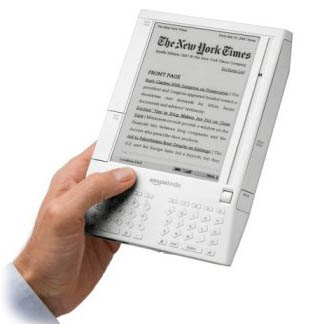
Why the Kindle is the Future of Reading

My Two Cents on the Kindle

Disclaimer: I have no non-public information on the Kindle. I don't even work in the same building as those folks. The following are just my own opinions and do not reflect the opinions of Amazon.com or any of its employees or partners.

I was walking home from the gym a few days ago and was listening to Buzz Out Loud bash the Kindle DX when I reached an epiphany that may be obvious but I wanted to share it anyway: the Kindle is ridiculously forward thinking and will most likely be the future of reading.

I've read several articles and heard multiple podcasts bash the Kindle, and I'm pretty tired of it. I don't own a Kindle, but playing with it for a bit was enough to sell me on it. The first thing wrong with all these "pundits" writing off the Kindle is that they're often not the target audience. Not everyone loves reading, and that's ok. The Kindle is designed for people who love reading. It's not designed to be a super sexy gadget like the iPhone or the Pre or anything like that - it's meant to be as functional as possible. I feel like we've entered a world of gadgets where style taking precedence over substance helps sales, and it sells some reporters on the devices, as well. I don't want to discredit all people that review gadgets, that's just an observation I've made about some of them. I haven't heard anyone who has a Kindle and enjoys reading tell me that they hate it or regretted getting it.

The real point I want to make is that a lot of the best technology starts out unpopular. Do you know why MSN was so late to the game with it's Internet services and web portal? Because Microsoft thought that the Internet was a fad (it's pretty hard to find a citation for this, but he definitely said something to the effect of "The Internet? We're not interested in it"). When most people hear MSN now they probably think of MSNBC, whereas the ISP didn't do all that hot (competing with the likes of AOL and Earthlink) and the web portal never caught up to Yahoo, which never caught up to Google, and the rest is history (although MSN is still around). Nowadays, the odds are slim to none that you'll go through your day without directly or indirectly interacting with the Internet. Our lives basically revolve around it, but I'll get back to this point.

There are a couple of other great examples of technologies that people mocked early on. When Jeff Bezos invented e-Commerce in 1994 with Amazon.com, people thought he was out of his mind. Why would people want to buy stuff online they could drive to their store and get instantly? Why would you buy a book that you can't flip through in a bookstore? And yet, here Amazon stands as a formidable force in retail in the U.S. with a growing presence across the world. The people who doubted Jeff Bezos weren't stupid, they just weren't thinking ahead that far. The DVD format was seen as ridiculous since it required a new player and the discs cost more without a very big jump in quality as far as most people were concerned, and yet now almost every house has a DVD player. Heck, just a couple of years ago pundits thought that the iPhone was prohibitively expensive and no one would want to pay that much money for a smartphone without a keyboard. I think we all know what happened there.

The lesson to be learned here is that you can't believe what you hear in mainstream media - take it with a grain of salt. The common thread is that the doubters weren't forward thinking. The iPhone provided so much value and gave people such a rich experience that price just wasn't an issue to them. The Kindle is expensive, and yet people are still buying them. I don't need top secret information to know that - I see them outside on the bus and at the gym. Amazon sold out of them this past winter. If you don't want to believe that, you have to believe that 35% of sales on all books that have a Kindle edition are that Kindle edition. Books are the bedrock that Amazon.com was founded on, so 35% of a book's sales being for the Kindle is a pretty big deal. As much as all these journalists want to naysay, people aren't being deterred.


So why are people paying so much for a device that serves a single function? In a way, I think it serves a lot of functions. Not to sound like a broken record, but we live in an information society. Think about that for a second. The amount of knowledge we have available instantly at our fingertips has grown dramatically in the past couple of decades. I'd posit that people are actually becoming smarter because even though they haven't to remember less stuff overall since they can always just look it up, they also look up and learn more stuff because they can. We know names of random actors and actresses because of IMDB. Small underground artists are building worldwide fanbases through digital distribution. Let's face it, books aren't as portable as we'd like to think. If we want to read multiple books, we have to carry them in a bag. If you're a student - this really sucks (especially math and science texts). The Kindle not only lets you carry all these books in a thin, easy to carry package, but you can get leverage the Internet to get books directly onto it. Past that though, you can highlight and make notes without damaging the book, and you have more room than just the margins. Plus, you can define words you don't know on the fly (context clues don't always work), and having that kind of power for younger students can really encourage their thirst for knowledge.

If I'm not convincing you by now then maybe I'm just not explaining it right, but the Kindle is an improvement on a dying technology. People just don't have a whole lot of free time anymore. We wait around a lot, or ride public transit, or do other random things where we happened to be free, but it's not really free time. That's why carry mp3 players to fill that time. Books often lose the battle for our time because they're just not as convenient as carrying your iPod. If a Kindle is portable enough to carry to a gym, then it's portable enough for most anything. I fully understand that people love the feel of books, but people love the feel of CDs and yet they're still around while mp3s are popular. Why can't the same be true for books? I think books will die off in favor of digital copies some day, but that's a really long time from now. The Kindle may be a bit ahead of its time, but it's going to take a while for it to really catch on because an e-Reader is such a radical concept. Amazon has just done well because they have the online book store with access from where ever.

As for price: the first iPod and iPhone were expensive at first, too, but the price went down. Same with HD TVs, DVD players, personal computers, laptops, etc. It's going to be a while. For college students, the cost of a Kindle DX amortized over 4 years would easily be cheaper than real textbooks if the cost of these books were maybe half (even without the ability to re-sell books). For grade schools this could put a huge dent in their budgets if they could give each kid one of these and pay less for books (plus the drop in administrative costs if they could be managed remotely). The possibilities for education are really endless, and it's really a lot easier to study if your books are always with you in a portable device. I know I would've gotten more done.

Ok, I think I've gone on long enough. I hope that thoughts haven't been all that scattered, I just feel like I need to stand up for the Kindle because I honestly believe in it. I think that Amazon has been really smart so far in its diversification of not only its stores and acquisitions but also AWS, and I think that the Kindle is another key cog in its future (much like when Apple jumped into mp3 players and cell phones, which ended up re-vitalizing the Mac). The Kindle vision is "every book, every made, in any language, available in under 60 seconds". That vision is immensely inspiring. It feels pie in the sky, but it is possible. I think that alone should be enough to sell people on the idea of the Kindle being the future of reading. The idea of having the entirety of human knowledge available at your fingertips in under a minute is priceless. The Internet has taken us on that path, but it doesn't have the full text of every book every made in any language. The point I really want to get across is that we're at the forefront of an entirely new industry, much like digital music when Napster got big or the beginning of the end of broadcast television as we know it when Hulu came out - savor the moment. Don't buy into the hype and don't buy into the cynics, just be reasonable. That's all I ask.

Microsoft vs. Apple Ads

The advertising war between Microsoft and Apple is alive as well. It was pretty lopsided for a while, probably partially because Microsoft didn't want to seem like it was bullying an underdog, but Apple pushed too hard and woke the sleeping giant. The latest spin out of Redmond (aside from the commercials where people buy cheap PCs) is that it costs $30,000 to fill an iPod. The reason they can get around this with the Zune is that it's subscription-based, which has the advantage that for $15 a month you get all you can eat music plus you can keep 10 of them each month. Anyway, I still thought that this was kind of a stupid tactic from Microsoft, but meanwhile Apple came up with an attack that you couldn't get a PC without the stuff people hate about computers.

Which is a more ridiculous ad? The answer is that they're equally crazy. You may think that the Zune one is more dumb because most people already have a library of CDs and music to fill up their mp3 player with, but the Mac ad doesn't make any sense. Macs aren't as stable as people think they are - if you use certain software you will see crashes. I used iMovie for few months on a Mac Pro last spring and it crashed almost each time I used it. There are definitely security vulnerabilities for Macs, too, and it totally ignores the inflated price of a Mac. I'm not saying that Macs are bad computers, but these ads are slinging mud. They know that people won't fact check, but they're not quite slanderous so Apple can get away with them. My point is simply that when Microsoft comes up with ads like this Zune one, just remember who cast the first stone.

I have one more thing to slip in here: Google started airing a Google Chrome ad created internally by Google Japan just for fun. It's interesting that they care this much about Chrome (what's their master plan?) and that they're using a competing advertising venue to sell themselves.

Facebook's Funny Money

Ok so they don't really call it funny money, but I still can. Facebook is toying with an idea that's certainly not inventive, but it could definitely help them get on the track of a successful business model. They're testing a payments system with developers where virtual money can be used between applications to buy and sell virtual (or I suppose even physical) goods and services. It would make buying stuff easier and safer (like getting a wristband of money at a water park), and Facebook taking a cut of the transactions could help them replace/supplement their oft controversial advertising model with something less obtrusive. I don't really know if it'll work because I don't know if people will really trust Facebook with their money or want to buy what third party developers offer, but I'm definitely anxious to see what happens.

Meanwhile, their employees are going in the opposite direction: having imaginary money turned into real cash. Facebook has sought funding (to the tune of $150 million) from private investors to buy back their employees' stock to keep loyal employees around who have been chomping at the bit for a cut of the profits they were promised but haven't come to fruition quite yet. Won't people leave if they get rich off their stock? More importantly though, isn't this a dangerous financial decision? $150 million seems like a lot of money to bet if they don't come up with a good business model before their star burns out. I hope they know what they're doing.

Final Notes

Aside from being tired from today (didn't sleep enough last night), I think you're tired of reading this post by now (assuming that anyone is actually still reading this). Let me link you to a few other interesting tidbits before I send you on your merry way:

Google has launched a search options feature to try to get themselves closer to real-time search. They're actually pretty nifty.

The CEO of Sony Pictures admitted that he doesn't see anything good as having come from the Internet. You don't have to scroll up very far to get my opinions on the glory of the Internet, but it goes to show how backwards the movie industry can be and why licensing for TV shows and movies and their related properties is so wacky. If their CEO is living in the past then how can they hope to have a future?

The judge in the Pirate Bay trial has been under fire recently for having been involved in a pro-copyright association in Sweden (which he claims didn't bias him), but now they're starting to discover that his appointment may not have been random (as is supposed to be the case in Sweden). The plot thickens! Will it be called a mistrial?

Smashing Magazine has a really well-written article on how to optimize your website's conversion rates with usable designs, and it's full of pretty pictures. I love the concepts they point out here, and I think it's worth a read if you're interested in usability at all.

Coldplay is releasing their live album for free. Enjoy.

I hope you all have a great week! I think I'm going to spend my nights trying to learn how to play this.

Sunday, March 08, 2009

Watchmen

Watchmen Review


Watchmen is probably one of the most revered graphic novels of all time and even made it on Time's list of the 100 greatest English-language novels of the past century (the only graphic novel on that list, in fact). Zach Snyder was rightfully hesitant to take the helm of this film adaptation, a much greater feat than 300 was. Fitting over 400 pages into a 2 1/2 hour film has been in the works for about two decades now fraught with so many problems that fans all but lost faith that it would get made. Unfortunately, I didn't get a chance to read the novel before I saw the film, but I still definitely enjoyed it.

First of all, I have to stress that this is not a superhero movie by any means. It's a graphic novel, and you could even call it a comic book (since it was a mini-series before being compiled into one book), but it's not your typical story of good guys and bad guys. It's more of a character study, time period study, and mystery that just happens to involve masked vigilantes. I'm afraid that it'll get compared to The Dark Knight and Iron Man when it should be compared to 300 and Sin City. It's probably more similar in genre with Sin City than any other popular movie based on a graphic novel. Anyway, the premise of this movie is that it takes place in an alternate 1985 after the retirement of the second age of superheroes who call themselves "Watchmen" but are really just masked vigilantes (as only one of them have superhuman abilities). They've been ousted as protectors by the people, and the movie starts with the murder of one of them - the plot just unfolds from the mystery of this murder and where these characters are now.

Even though I haven't read the novel, I can say that the scenes in this movie are true to the text - that's how obvious they were. That's not necessarily a bad thing, but it's clear that the visuals and the dialogue came straight out of a comic book, so I don't imagine that fans of the novel will be disappointed. The real problem is everyone else. The greatest triumph and worst thing about this movie is the way it's presented: in a complicated, multi-layer form fraught with flashbacks, clear thematic devices, and dense characters. If movies were meals, you'd have to loosen your belt at least two notches after watching this one - it's huge. It's actually hard for me to piece together the movie from beginning to end just a few hours after seeing it because of how much happened in those 2 and a 1/2 hours (originally 3 and a 1/2 hours) to do any sort of justice to the original form. Alan Moore (the writer of the novel) refuses to watch it because he purposely wrote it to not transfer well to any media except for a comic book. I think he was right, but I don't think that anyone else could've gotten any closer than Zach Snyder. As great as the story itself is, the movie is simply too long. It either should've been cut down more or split into two films (possibly including the cut hour), but both of those options would've pissed off the fans so I can see why they didn't do that.

I have to stick with the story for just a bit more because it's really pretty powerful. At it's heart, it's truly belongs in some sort of mystery genre. The characters are fleshed out really well and the actors/actresses did a fantastic job overall. They pretty much jumped off the screen. What you have to appreciate about this movie is how well it performs as an anti-super hero movie and shows you what's wrong in a world with superheroes (somewhat like The Incredibles). It's also holds no punches in its themes and political messages. To top it all off, it's quite dark and serious. You're more likely to walk out of the theater trying to dig up your old Staind CD than go dancing. Still, it's really worth experiencing for the story alone. The only thing I didn't like was the comedy theme, which I thought was too drawn out and uninteresting.

Visually, it's great but not extremely impressive. It had powerful imagery, but they felt a little too obvious as throwbacks to the novel. We saw it in IMAX and it looks great on the big screen, but I could definitely see noise and grain, and the colors were purposely dark and dull to mesh best with the milieu. I did love the costume and set designs though - I believed the movie's world wholeheartedly. The soundtrack, on the other hand, was one of the best things about the movie. It was pretty much perfect. It was retro and always appropriate for the scene, often serving as needed comic relief. You'll probably find it pretty nostalgic, too.

The last thing I want to bring up before I wrap this up is that it's very much an R-rated film. I didn't think that The Dark Knight was appropriate for anyone not of high school age and this movie's often gratuitous violence and sex scenes never hold back. It's not saturated in either of the two, but some of the violence may have you turning your head, which I've heard wasn't in the original graphic novel. Still, I think it uses the rating well in having the freedom to tell a very dark story in a big way.

I think I've gone on long enough: this was a great film. I think I liked The Dark Knight and Sin City better in terms of dark, mystery films, but it's definitely a better movie than Sin City. It's definitely not for everyone, hence the mixed reviews, but if you can stomach the length of it I think you'll be in for a treat. I give it an A- and would say that it's probably the best thing out in theaters right now (and it's already grossed $55.7 million).

The Mobile Disincentive

A topic that I regularly end up landing on is our increasingly versatile and mobile society. We've become used to having easy and frequent access to computers and the Internet. The smartphone industry used to be a blip and now you can scarcely walk down an urban street without spotting an iPhone or Blackberry. The problem now isn't availability of devices, it's price. The data plans out there are pretty harshly anti-consumer. AT&T should not start their data plans at $60 a month, and the prices just get higher and higher. It's funny how the cell phone infrastructure becomes naturally more profitable over time with more customers and the amortized costs of having built it up, and yet we have to pay so much to send simple 140-character text messages.

In fact, they cell phone users pays $3 a minute on average. So why aren't there any all-you-can-eat plans (not counting Sprint's ripoff plan that's advertised on TV)? It's all about an industry that's well controlled by a few big companies with heavy barriers to entry. Their interests are not in the best interests of society, which is the point at which the government can legitimately be allowed to intervene. So I was pretty glad when President Obama appointed an FCC chairman sympathetic to net neutrality (see my video for more on what that means). I know that's kind of a segue from cell phones, but I'm trying to tie everything to the idea of freedom of information and access to it. He still has to be confirmed by the Senate, but hopefully he is. We've stood by and let this happen to us, and hopefully we can get things to change. Something as simple as ubiquitous access to the Internet via mobile devices can make a huge difference, and having an equal right to provide content online to anyone else is also important, so I'm always willing to plug it here.

First Apple Announcement Sans Jobs

Apple released a few new products last week, which would probably normally be announced at a small event by Steve Jobs with much fanfare and press coverage. Instead, it was a very quiet press release for an updated 24-inch iMac at under $1500, a new Mac Pro, and a new Mac Mini. The only one of those to receive much coverage was the 17" MacBook Pro which I'd argue appeals to a somewhat niche audience of individuals willing to drop a ridiculous amount of money on a large laptop. I'll admit that I'd gladly take one if they were handing them out for free because they're pretty solid, but the point is that these new products were seen for what they were: new iterations of old technology. It's just refreshing to see a change from the normal fanboy-ism.

More Data Leaks

Before I get to the juicy stuff, I have to get to a quick fun little article. The annual Pwn2Own contest is an annual event intended to expose vulnerabilities in operating systems and Internet browsers for research and patching. Last year's winner says that Safari will be the first browser to fall this year. Why? Because it's too user-friendly. It supports too many file formats and such, leaving it open to more mistakes and, hence, more vulnerabilities. He hacked an instance of Safari within two minutes last year, so I imagine he's fairly confident in his abilities. I just find the tradeoff between usability and security really fascinating.

The big security news last week was confidential information related to Marine One, President Obama's helicopter, has been leaked to someone in Iran over a peer-to-peer sharing network. This has been an argument against P2P since its creation, and it has finally happened in a big way. This actually happened last summer and has only now been discovered, and it's not the first time that private information has been leaked via a P2P network, but it is now one of the most famous of these leaks.

The FAA had a heavier data breach: the personal records of over 45,000 current and past employees. While your flights are still safe, the problem is going to be identity theft for these poor people.

The lesson to be learned here is that computers are more sophisticated that most people give them credit to be. Despite how sexy a Macbook looks, it can be quite dangerous if used improperly. People working with sensitive data, especially pertaining to national security, need better training with regard to stuff like this. It may seem dumb that this was leaked over a P2P network, but it's not as boneheaded as you make think for someone who doesn't have the proper knowledge for securing a computer, let alone a network.

Windows 7 Security Quirks and More

Meanwhile, Windows 7's User Access Control (UAC) system has had a third vulnerability discovered. From what I can gather, the problem is that you can run Windows components as administrator from programs not running under administrator permissions, which is a flaw used by Windows itself for some of its core functionality. A hacker could potentially use this to place files in locations the user can't access and then load them to do bad stuff. This basically renders UAC useless, in a way. The bottom line is that Microsoft needs to take a seriously look at its "improvements" to UAC and really weigh what they're losing in exchange for making it more user-friendly.

Another fun quirk is that you'll be able to disable Internet Explorer 8 in Windows 7 by deleting the executable entirely. It's specifically intended to appease European regulators, but my assumption is that it'll apply to American Windows 7, as well.

Lastly, if you're interested in what Windows 7 features await us past the beta, you'll like Tech Radar's roundup of 12 of the more notable MIA improvements.

Kindle on the iPhone and Game Trade-Ins

Last week brought some pretty cool Amazon-related news. You can now read your Kindle books from your iPhone via a free application that will additionally stay in sync with your Kindle (so bookmarks and such). It's obviously not as satisfying as the experience on the Kindle, but it seems to be pretty cool, nonetheless.

Also Kindle-related: Slate had an article I liked explaining why computer voices are the way they are: cold and emotionless. Text-to-speech technology has been around for over 2 decades, so it's just interesting to learn about why it's not farther along.

Last, but not least, Amazon released a new part of the site: video game trade-ins. If you have video games valued at $10 or more than you can print out a free shipping label and send them in for an Amazon.com gift card to buy whatever you want on the site. It's definitely a really interesting way to compete with Gamestop in an economy that increasingly turning to online retail, and I'm really curious to see how it turns out, especially since the value of the trade-in can be applied to anything Amazon sells, not just games. People are clearly willing to rent video games and movies by mail, but are they willing to trade used games by mail?

Yahoo Reaches Out to Old Media

In the latest chapter of the ongoing Yahoo saga, they've been trying to encourage more newspapers to advertise online through them. This is kind of an old story that the New York Times is just now picking up, as is their custom with technology (which is why I almost never read their technology related articles anymore), but it kind of exemplifies Yahoo's strange decision-making. While I don't think they should cease to do business with newspapers, they've been in trouble for a long time now. I don't imagine that their financial gains from these sales have been very strong, and it's a strange business for them to have ever focused on.

Enter Carol Bartz. She was recently hired as Yahoo's CEO for being fairly aggressive and having a reputation of shoring up ailing companies. She acknowledges that Google Maps is better than Yahoo Maps and even admits that one of Yahoo's problems is neglecting products that would otherwise have been great. What I like about her is that she sounds like she's intent on focusing the company on the core user experience, which is something that I definitely believe in. She's willing to trade ads for improving the UI where it makes sense and wants Yahoo's software to integrate better with outside services. I really hope that she can make a difference because I'm still maintaining some semblance of hope for poor Yahoo.

Final Tidbits

Ok, I'm on call tomorrow and it's almost time for bed, so let me race through some quickies.

The new trailer for Star Trek is pretty spectacular. I have no real interest in Star Trek in general and even I was enticed by that trailer.

Firefox has finally overtaken IE 6 in browser share at 24%, only about 16 points behind IE7.

Tux Radar has a bookmark-worthy list of Linux tips that every Linux power user should know. I definitely got some valuable advice from it that answer questions I've had for a long time, like finding the biggest files when you're running low on disk space.

If you're wondering how to pitch Linux to your business, this is a pretty good resource. It's 25 reasons to switch, and it's pretty convincing. I'm a big fan of Linux for businesses, but it's definitely not for non-techie home users.

PC World has a short list of Microsoft web services you probably didn't know about, which I mention because it got me to start using SkyDrive as a result, which has a questionable UI but affords you 25 GB of free storage in the clouds.

I really like this video of Microsoft Office Labs's vision of technology in 2019. The comments are unsurprisingly sarcastic about Microsoft in the status quo, but I get really pumped when I see stuff like this. It's an awesome time to be involved with technology, especially since several of the things this video shows are definitely within reach in the next decade.

Lastly, Twitter has finally integrated search into the site (a long overdue feature) and now plugs featured users on the site, which is a controversial new feature but these are all fairly small and unobtrusive things, compared to Facebook's frequent deluge of new stuff.

Ok, I think that's enough for one week =) Just read a few paragraphs a day of that and have a great week, everyone!

Monday, January 26, 2009

Q4 Earnings Reports Madness

Microsoft, Intel, Google, and Apple's Earnings

A lot of tech companies released their quarterly earnings for the holiday season last week (Amazon's will be released this week), and most of them were unimpressive. I was rather shocked to discover that Microsoft's revenues only went up by 2%, which is $900 million short of their forecast. To appease the investors and shore up their profits for Q1, they have decided to lay off 5,000 workers over the next 18 months, with over 1/4 of those jobs cut last week. They're cutting jobs in several departments, so not just in HR and R&D, but also their software engineers. In fact, the entire Flight Simulator team was let go, which is probably their oldest video game franchise. To make matters worse, Zune revenues dropped 54% year-over-year whereas the iPod gained by a few percentage points. The number is slightly more sad when you find out that 54% means about $100 million.

Steve Ballmer sent out a letter to all of Microsoft's employees about the situation, and I actually really liked the letter. Despite his public antics, I thought that it was really honest and heartfelt, and it pretty clearly laid out that they're handling this weakened economy with a good plan. I'm sure that it was not an easy choice for them to layoff any employees given how much they invest in recruiting smart people. I don't think Microsoft has ever laid off people before, but I guess it just goes to show that even they don't have enough money to save themselves when times get as bad as they are right now.

Meanwhile, Google saw a strong 18% growth in revenues year-over-year. They did see a drop in profits, but it looked like it was due to some investments and not reflective of their actual earnings. Another big article that came out last week, maybe a bit ironically, exposed an e-mail thread circulated among ex-Googlers in which they listed the things they loved and hated about life at Google. Some of the biggest complaints were incompetent managers, a ridiculous interviewing process (with 13 interviews for a single position being normal), salaries lower than competitors, and overall bureaucratic difficulties. It's a good thread that I spent far too long reading, and it's just interesting that no company is perfect. I have a lot of fun at my job, but some days aren't as fun as others and some times pager duty can be terrible. I think what's important is that you feel like you're making a difference with what you do, and I definitely get that feeling and it sounds like even some of these Googlers did. It sounded like some of them joined Google for the wrong reasons: the flashiness of the playground that is their awesome Mountain View office, but it's a lure that few can easily resist so you can't fault them for that. Anyway, if you ever wished you could work at Google maybe that article will help you appreciate some things at your workplace.

Intel saw weak PC sales with a rise instead in Netbook sales (something that hurt Microsoft, as well) causing a whopping 90% drop in profits from Q4 2007. They've decided to rethink 5,000-6,000 jobs, which is my way of saying that they're going to either transfer around or lay off that many people. AMD is cutting 9% of their workforce, about 1,100 jobs. They probably won't cut chip prices much since they're already so low, but it is sad to see so many jobs cut because I wonder how much innovation we'll see in chip-making in this down economy. I guess this would be a good time for AMD to swoop in and dominate Intel or a new player with deep pockets to enter the market.

Meanwhile, Apple's profits only dipped a bit with profits just barely surpassing the previous holiday season (a $100 million growth in revenues from $11.7bn to $11.8bn), which is something that no one scoffs at nowadays. It doesn't help that they're also being investigated by the SEC for their disclosures about Steve Jobs's health, which doesn't mean that Apple has necessarily done anything wrong but just that the SEC is doing their due diligence (possibly due to complaints from disgruntled investors). It is kind of odd that Steve Jobs's health didn't decline until just after Macworld, but it could just be coincidence.

One last thing to sneak in here: it turns out that IT workers got a raise of 4.6% overall in 2008 with an average salary of $78,035. Of course, IT managers had the highest salaries at around $111k, but nearly a quarter of those surveyed to get these figures said that they were concerned about staying valuable to their employers and almost the same number fear getting laid off. Those raises only match inflation, and it's still sad to see my fellow programmers so worried, but I think this economy has affected almost every industry. I look forward to seeing us bounce back together, and I hope that people band together and help each other out. I've been spending a decent amount of spending because of my vacation and my new TiVo, but I've definitely been cutting back on things I might've otherwise done (like weekend ski trips) to make sure I meet my target monthly savings amount.

Obama is President, Tech Stories Galore!

In the wake of Obama's awesome inauguration last week, I actually tagged 6 articles that I'm going to run through here about the start of his presidency and the inauguration. By the way, I really liked his speech. At first I didn't as much as I did some of his other speeches, but I thought he brought in some great quotes and it showed that he's very aware of the current situation and will do whatever he can do to help us bounce back. His faith in our country is just awesome.

Anyway, they had a lot of tech ready for security for the inauguration including a reconnaisance plane, tons of cameras, over a hundred intel teams, and, of course, metal detectors. Google took some pictures of the event from space, also, and the sheer number of people who showed up is pretty crazy.


Obama may be our most technologically aware president ever, and that's apparent in the fact that he asked the chairman of Sun for a white paper on how the U.S. government can benefit from open source software. The average American probably doesn't know what open source means, so the fact that he's willing to turn away money from big vendors to look into free, open-source solutions more widely is crazy. A number of government agencies already have gone open source, but the more the merrier. I personally think that the way to go is a balance of proprietary and open source software, not necessarily 100% of one or the other. His staff is so technologically advanced that they were a little peeved at their lack of communication with the outside world through their new computers. Not only that, but the computers they got were mostly desktops running old Microsoft software rather than the Mac laptops they were accustomed to, and the White House site was not very up-to-date last week. It'll be interesting to see what processes are changed and how much the White House will embrace the bigger social networking sites. They've already taken over the White House twitter account and have started updating it with daily updates.

One last Obama-related article: Read Write Web has an article linking to 7 things you can do online to help Obama "restore America", and I think it's great. Whether or not you were thrilled about Obama getting elected, everyone can agree on getting your finances together and staying informed and stuff like that.

Blu-ray Here to Stay

I've heard several techies counting Blu-ray out already because of how hot digital distribution is, but they're missing the fact that people like owning movies in a physical format. The problem with digital content is that even if you have a TiVo or Apple TV, you have to store your movies on a hard drive or something if you want to keep them, and what if the next big machine doesn't support that? Conversely, Blu-ray players are growing in popularity and the PS3 will be around for a while, and DVDs are still readily playable, so why turn away from hard formats? CNet has a great article talking about this and more as to why Blu-ray is going to succeed. It had a rough start, I know, but this time next year I would bet that things will be very different. The ridiculous growth in HD TV sales, even if they're lower-end TVs, in this economy means that people don't want to cut out entertainment from their budget, and they're going to start noticing that NBC in HD looks a lot better than any of their old DVDs do. Not only that, but Sony is very invested in the success of this format, so they're in it until the bloody end. Until like their past crazy formats, this one has become the de facto for HD video for the forseeable future, and they're going to aim to keep it that way so they can stay afloat.

The Windows 7 Taskbar Beats the Dock

Gizmodo has a controversial article up claiming that the Windows 7 taskbar has surpassed the OS X dock, and I'm sure it has already incited a vast flame war. In the end, this is really a subjective distinction. Still, the fact that it's really vying for people's love of a taskbar is an impressive feat. Whether or not it's better or not is irrelevant compared to the fact that it's giving the Mac a run for its money as far as having a beautiful and functional access bar to applications. Some of the advantages that Gizmodo cites includes Aero Peek to easily see into what the windows have, the flashing colored glass to grab your attention, the scalability to accommodate running a lot of applications at once while still having them be usable, and jump lists (quick access to the most frequently used pieces of an application). They don't overlook the shortcomings (like no text to describe windows), and they just give a great comparison with the OS X dock.

TiVo Review Coming Soon

I just wanted to note that I love my TiVo HD. It's awesome. If my TiVo could talk to me and asked me to sacrifice the Motorola DVR I've been renting to my fireplace in exchange for its continued cooperation, I'd totally do it. I literally set a high priority series recording for Lost and the stupid thing (the Motorola) totally forgot about recording it! There was no competing recording, it just didn't feel like recording it. To the contrary, I was able to set Season Pass recordings for a few shows at work a few days ago for my TiVo and they recorded that very night! I even set one recording from my cruddy Treo phone using their mobile site and had no problems. Not only does it not miss recordings, but it doesn't record every airing like my Motorola incompetently does and it even records shows it thinks I might like (and actually does a pretty good job of figuring this out, to be honest) to fill up some of my free space. While you can't manage your TiVo's recordings online, you can remotely set it to download online content (like video podcasts). There are so many things to talk about that I'm going to do a video review in late February. Why so late? For one thing, I can't get a CableCARD until February 18 because Broadstripe is ridiculous (I'm using an antenna right now, which works beautifully on TiVo for HD network television), but I'm also waiting for my brother to ship me a tripod for my Flip Mino HD so I can record and navigate the TiVo. Some of the other awesome features is that I can transfer videos super easily (and even on a schedule) to my computer, I can use my computer as a home media server to stream pictures and music and transfer videos, Netflix integration, YouTube integration, Amazon Video on Demand integration, Season Passes that work, Wish lists (that also work), great search (again, it's amazing how other DVRs can fail so terrible at this) that works, and so much more. This is one of my favorite devices ever, hands down. It's just that good. This is the kind of living room device I've always wanted - between this and the PS3 I'm completely set for home entertainment (plus my HD TV, of course). What a great time it is to come home after a hard day at work!

I'm going to piggyback on this with Engadget's rundown of all the ways you can access Netflix's HD content, including the TiVo HD, which is one of their recommended ways to access it even though the interface isn't as flashy as it is on the Xbox 360. I think it's interesting how many hardware devices Netflix and Amazon Video on Demand are on (TiVo, Roku, Xbox 360, certain TVs and Blu-ray players, etc.) as opposed to iTunes (iPods, iPhones, Apple TV). Granted, Apple probably has them beat in sheer numbers because of how many iPods and iPhones are out there, but definitely not in diversity of devices. Plus, iTunes videos aren't hosted online, so you can't stream them from where ever you want as many times as you want with Amazon Video on Demand. I wonder if they'll change their tune or even strike up more partnerships?

Final Notes

I'm seriously out of time here. Just a few last things super quick.

Two-thirds of Americans without broadband couldn't be bothered to get it, even with a stimulus package. This is kind of sad: it means that they don't understand what the Internet has to offer to them, and I hope that over the next few years they can learn how the Internet can help improve their lives (and hopefully not waste too much of their time in the process with Internet memes and social networking sites).

The Supreme Court has decided that a 1988 law against providing porn online to minors is unconstitutional. As you can guess: the law is too broad. It just didn't make sense and ended up penalizing traditional publishers who do their due diligence already.

This is a wonderful list of the top 10 Steve Jobs quotes. He was always known for saying insightful things, and even though I don't agree with all his ideas I think that he is one of the greatest visionaries the tech industry has ever seen and will be a historical figure long after his death (which I hope isn't too soon).

YouTube has started adding links for downloading some videos, but so far only on Barack Obama's channel. It's amazing how long this has taken.

Is your ISP net neutral? Test them out.

If you're curious as to how zip codes map out, this is a fun web application to find out first hand.

Enjoy your last week of January, everyone!