Showing posts with label Google. Show all posts

Thursday, July 28, 2011

Google +

I know it's been a while since I've posted, but I promise I've been thinking of the blog! I listfully look at my computer every night before I inevitably crawl into bed because life has been so busy. Today I finally got some time to jot down my thoughts about Google Plus! If you haven't checked it out at all yet, now's as good a time as any to spend a couple of minutes with the demo.

If you had two scoops of ice cream, let's call the flavors Facebook and Twitter, and you smashed them together but then you decided to share your concoction with that oddball at work you don't like for whatever reason, you'd have Google Plus. It takes the best from both worlds, but then it integrates with other services, even if they are competitors, via our old friend Google Buzz. Google Buzz was a half-baked Twitter-like experience from Google that all but the most devout Google fans were quickly turned off of because of the several issues Google simply didn't think through. What's different between Google and some other tech companies is that a lot of people there tend to think the same over time. I'm not saying they're not smart people, but without natural discord you can't develop the ideas that appeal to a mass audience, and that's what I feel like went wrong with Buzz. With Google Plus, they took a different approach - they started it out as a very limited release (like back with Gmail and Google Voice) and are opening the floodgates over time so that they can iron out the kinks. This strategy, I feel, is working much better for them. It feels like not only did they learn from Google Buzz what people were really looking for, but they managed to fix user concerns very quickly before everyone and their mom started hearing about Google Plus.

So anyway, you might be wondering - why should you care about Google Plus? You've stuck with Facebook, in spite of Twitter and Google Buzz and whatever else - why jump ship? A friend of mine shared this (on Google Plus, no less), so I'm going to share it with you:


Pretty elegant way of putting it, isn't it? Google should definitely hire those people to help them pimp their products. At first, I totally agreed with what I think is the reaction of most people: why do we need another Facebook? The interface was a pretty big change from Facebook and there wasn't an app for it on my phone. To be honest, I really hated it. I was surprised at how quickly my opinion turned around of it though. The main things I liked is that it's the first social networking site I've seen that has really put privacy at the forefront and it has a clean UI. It's a well known fact in the security world that convenience comes at the cost of security and privacy, so it is an issue that whenever you share anything on Google Plus, you have to choose exactly what circles you want to share it with - but if you keep your list of circles small it's not such a big deal. Granted, it'd be better if there was a circle hierarchy but that's not hard to add in. I say that the UI is clean because, let's face it, Facebook has gotten too busy. It almost hurts my eyes now to go to the PC site - it's just too much. With Google Plus, as weird as it sounds, I just feel like it's a more laid back experience. Maybe it's just because I have less friends on Google Plus, but I'd like to think that Google had something to do with it.

Before I move on - there are a couple of other things I think Google Plus really got right. I love how you can share with people who aren't on Google Plus by just using their contact profile in your Gmail (i.e. just their e-mail address). I think it's smart that they just rely on e-mail for messages rather than creating a stupid hobbled way to send private messages. Another thing I like, which most people may not like, is that you don't have a wall for people to post on - they can only comment on what you post. This means people can't post immature things on your wall that you have to monitor so that your mom doesn't see them or something - you have full control over what people see (people can re-share what you've said, granted - but that's a risk in real life, too).

Press-wise, I've seen mixed things. I think the technorati (that's what I like to call the tech journalism celebrities, at least) are skeptical but appreciate the chance to start fresh since their Facebook friends list has really gotten out of control. There's still a few things to complain about though. There have been some stories about people having their Google Accounts totally deleted because of the name they're using on Google Plus. It sounds like there's a glitch in Google's algorithm for this, and it really sucks that there's not a good appeals process in place. Google has always had awful customer service, and that doesn't stop here, I'm afraid. ZD Net has a really good editorial about this. Google Plus still isn't ready for businesses to jump in and make their mark. I don't shed a tear for companies like Pepsi or McDonalds, but social networking sites are really great for helping promote local businesses and artists, and I do hope Google Plus makes way for them someday soon. Though they do have 20 million accounts so far, so it's a pretty strong start anyhow.

So Google Plus has an energized initial user base but also has had a few black eyes from the press - do they have what it takes to become a major player? I think they definitely do. The older I get the more pessimistic I become about technology (I'm not the wide-eyed optimist I was back in my older posts when I was in college), but something rubs be right about Google Plus. Google has had a number of misfires over the past few years, but I think this one just may stick. If anyone can compete with Facebook, it'll be Google Plus. I don't think they'll be able to overtake Facebook like Facebook overtook MySpace or MySpace overtook Friendster simply because Facebook has really hit critical mass now. However, I think Facebook has alienated its users enough over the years that Google Plus can really gain some ground, even if it ends up catering to more of a niche audience like Gmail. I think it's a really smart move for Google and I hope they really invest fully in making it a solid product. It clearly has a lot left that they can do with it (why can people on Picasa but not Google Plus not see the pictures I shared with them?), but I'm definitely impressed that they've managed to innovate so much so far. At the very least, it's nice to see someone rattle Facebook's cage a big, isn't it?

PS This is my 900th post. Happy 900th to me! :)

Tuesday, August 10, 2010

A Prohibition on Software Patents

The Software Patents Situation

This article calls for the abolishing patents, but I don't think I fully agree so I'm going to stack them up with those in support of the prohibition of alcohol. As I'm sure we can all agree, Prohibition sucked.

The US patent system is by no means perfect, but I don't think I agree that companies shouldn't be allowed to protect their products. Just because it's being abused so badly in technology doesn't mean we should throw the baby out with the bathwater. When it boils down to it, the real problem with patents seems to be patent trolls. Granted, there's also a problem of patents being granted for silly things, but I think patent trolls are really what has created an patent arms race.

What's wrong with having patents for products you actually create though? Rather than squatting on an idea, I think you have the right to protect a genuinely good idea that you develop a product based on. I don't think you should be allowed to own ideas that never materialized or that you have no vested interest in other than to sue people because that's contrary to the basis of patents.

Blackberry Torch

A survey came out last week showing that less than half of all Blackberry users want to stick with RIM, but I think smartphones are a market where it's hard to predict what brand of phone you're getting next unless you're a month or two (or less) out from the decision.


Their newest phone is coming out in a couple of days and it's a doozy. It's a slider with a full physical keyboard, though a little thinner than typical Blackberry fare. Engadget has a full review. The OS is a pretty big shift here as it borrows elements from the iPhone, including a mobile browser worthy of the year it's being used in. It seems like the UI is a true evolution of the standard Blackberry OS, but there's nothing it has under the hood that 1ups any other current phone - it just joins the table they're already sitting at. One of the commenters said it best: it would be a great phone if it came out in 2008.

Wave is Dead

Google finally killed Wave, the little product that never could. Google went to great lengths to generate buzz for Wave before it came out, so what went wrong? Marketing to nerds is a tricky thing, and if you can't make a compelling case for it then they move on to the next shiny new thing. It's not enough to be a novelty, your product has to serve a definable purpose or set of purposes. I think wave was a great idea that didn't have enough practicality behind it. The curse of a great engineer can be not having the right direction. Still, I think it's cool that Google took the risk anyway. No risk, no reward - that's the story of any great CEO.

Other Stuff

A page derailed my night, so I have to wrap up early here.

Amazon launched the Kindle store in the UK.

Barnes and Noble is trying out new and used textbook purchases as well as rentals.

Android now has the largest smartphone market share in the US.

Make sure you keep your Windows machine protected - here's some great free antivirus choices.

This is a list of some Google services that don't get much attention despite being pretty nifty.

Tuesday, April 06, 2010

Perking it Up

Be Wary of Tech Firm Perks
There wasn't a whole lot of news last week, which is good because I have a really full plate this week and need to get into the office early tomorrow. I thought I'd kick off things with this article about tech firms trying to outperk one another in the face of a job market where there's a limited supply of talented software engineers. There is a big difference between a software development engineer and someone who learns how to write code from a book. Even with some industry experience, depending on the company/companies they've worked for they're not necessarily going to be so talented and for these companies it's cheaper to beef up the perks to attract top talent than risk cheaper talent that may end up being harder to maintain in the end. It may seem exuberant in a down economy, but that's the way capitalism works. It's all about supply and demand. There is real value to these perks, too, in how people perceive going to the office. A lot of people seem to drudge through their weekdays whereas at a company where getting a quarterly award means a weekend with a Lamborghini is quite a difference.

However, I'm here to warn you about these jobs. I don't want to name names, but there were companies that were offering awesome perks (tempting to me, for sure) that laid off employees last year. Having perks doesn't indicate job security. The sexy jobs aren't necessarily the best horses to bet on. I don't want to discourage folks to take calculated risks in joining startups, but I think it can be misleading to be pitched on all these great benefits only to have them later taken away when the economy goes into another recession. It's important to ask yourself this question: if the only compensation I received at my job was my base salary (with any cash and stock bonuses) and health benefits (I'm including medical, dental, and vision here), would I be happy with what I do? Let's assume that the culture for the most part stayed the same also, you just didn't have free yoga twice a week. Do you do your job for the perks or for the work you actually do? I think if you pick with your heart what you'd really like to do then you're on more solid ground. I think it makes sense to also consider a workplace with job stability if you have a mortgage or a family, too, but I don't think all the recruiter-speak should be what sells you on a job. Now that the CS job market is heating up, caveat emptor is more or less in full effect for those of you looking for a job or looking to switch jobs.

The iPad is Out

The iPad has now been officially released. A few reviews came out last week with one of the most glowing ones coming from PC Magazine. Their review was so positive that it almost seemed like the reviewer was already really positively inclined for the iPad and was willing to belittle some of the big drawbacks. And, granted I'm biased for the Kindle, I thought they were a bit dismissive of the Kindle in the wake of the iPad when the two are completely different devices. I'm sure that it's a great device for what it is, but I think value should be a consideration in a review, as well as the lack of major things like Flash. Still, the mixed reception may indicate that it's not going to be the flop it was predicted to be.

Gizmodo has also been doing its best to review as many apps as it can and it looks like there's some really good stuff out there.

Google Blocked in China

Google's saga with China may have finally met its end. Google stopped censored off and on for the past couple of months in the wake of an attack from a Chinese computer that was at a university but the US government believes was a cover for an implicitly sanctioned cyber attack. Now, the Chinese government has blocked Google's Chinese site and damned Google in the media as being co-conspirators with the US government against China. This was in the wake of Google's announcement to move the site offshore and Google has said that they may have to close their sales offices in China. This is pretty serious for Google employees there who could be considered enemies of the state as a result of their relationship with Google. I wonder if the people there wonder that their government's sudden response to this seems odd like maybe Google isn't the one in the wrong, especially since it was such a strong brand in China. Google is giving up a lot of money and potential business if they don't fight back on this, and they may morally decide that it's not worth the money to get back into China. If they do decide this, then kudos to them for having the moral courage to do that.

4G is About Congestion

Ars Technica has a really great article about 4G being a response not to speeds being super slow on mobile devices, but rather the fact that congestion is killing data availability in areas with perfectly good coverage. It's an important point to be made because I've heard people dismiss 4G because they don't think the speed boost is necessary and may hurt battery life on current generation cell phone technology, but we're outgrowing our 3G networks. AT&T is a prime example of that in some of nation's bigger cities. I may be one of the few people who believe in the future of 4G, but I think there's good reason to hope for the best there. Depending on the implementation, 4G is usually more scalable than today's 3G networks, and that's ultimately what we need to sustain growth in our consumption of data. We shouldn't let infrastructure hold back innovation, especially if there's a need for it. It's hard to consider that when 20 years ago we didn't "need" e-mail on-the-go, but the world is ever-evolving. I'd like to think we're mostly evolving for the better.

Windows 7 Market Share Strong

Windows 7's numbers are out for March and it looks like the young OS already has more than 10% of the market. Though XP is still the biggest piece of the pie, Windows 7 is gaining share much more quickly than Vista did and there may not be an end to this growth for a while.

As great as 7 is for most people, it's not without its flaws. According to data compiled from Microsoft's security bulletins last year, 90% of known vulnerabilities in Windows 7 can be fixed by removing admin rights. Though, to be fair, I don't think any OS has admin rights down quite perfectly yet. It's a tough nut to crack in compromising convenience for security.

Windows 7 being the first solid OS release from Microsoft in quite a while may show a change in the times for Microsoft. They're even experimenting with putting Office Starter on new PCs where Microsoft would make money off of people then upgrading to a paid version. I'm not sure what's gained in the paid version from the Starter, but I think it'll be great for lower income families.

Final Notes

Ok, I dragged on a bit longer than I meant to tonight, so time to wrap up.

CNN has a great article explaining why Internet is faster in South Korea than here. It's partially because of their land being less spread out but it's also a result of intense competition, which doesn't exist so much here since we have so many local monopolies (or small oligopolies).

If you're not concerned about your passwords, then read this explanation from LifeHacker on common cracking techniques and maybe you'll re-think your passwords. The key is to seed them all in a way you can remember them but then add things to them to make them unique in a way that wouldn't be too easy to guess.

Google Chat may soon get file transfer!

PC Mag has a really nice roundup of free software in several categories - it's worth taking a quick look for any needs you don't have met.

Last week, I saw John Mayer and Michael Buble in concert. John Mayer was good, but Michael Buble was incredible and well worth the price of admission. I thought I'd close off by sharing one of my favorite parts of the show: his cover of Billie Jean in homage to one of his main inspirations, Michael Jackson:

Sunday, February 14, 2010

The Buzz About Google Buzz

Google's Social Foray

Be forewarned: I have to talk about a lot of Google news today. They just dominated the media last week - there's no getting around it.

At the center of it all is Google Buzz, which has clearly attracted at least the amount of attention as the iPad from the tech community. Compared to most other Google launches, except for Wave, the amount of buzz it has gotten is kind of uncharacteristic of a new Google product. I don't think it's quite the buzz that Google wanted though.

So what is Google Buzz? Simply put, it's Google's take on social networking. It's a tab in your Gmail account that lets you connect with your friends as they interact on a number of services including Twitter, Picasa, YouTube, Blogspot, Google talk, Google Reader, and Flickr. It basically gives you a feed of the people you follow ala Facebook and lets you update also kind of like on Facebook where you can say stuff or post a link or photo. You also get some finer controls on privacy. Their vision for this is a little bigger than what you see in your web browser though since you can have a Buzz layer on Google Maps to see where your friends are (I guess like Latitude but on speed?), and the mobile apps do voice recognition. If you're on webOS though you're out of luck - Google didn't show any love for Palm.

Why would you want this thing? Well, Google is selling it on the premise that it hooks into your Gmail so if you're on Gmail then you get it for free and it just gives you the stuff you care about, but I don't know how it figures out what you care about unless it strictly bases that off when you click to "like" stuff. In my opinion, it's kind of silly and unnecessary. And I'm definitely not alone in that camp. For one thing, it doesn't really add any value except for the Google Maps layer, which I can't vouch for and is something you can kind of already do with Latitude and Foursquare. I can understand that Google doesn't want to get left in the dust with social networking (as they've already shown with domestic failures Orkut and Dodgeball), but this isn't really great timing for it. My running opinion of technology is that it should solve a problem or fill a need, but I don't think this does either.

To make matters worse, there have been serious privacy concerns called to attention. For example, the default when it launched was that the people you followed was public and you were auto-following a bunch of people from your Gmail contact list, so this was basically revealing part of your address book to the world. They've fixed that, but as CNet aptly puts it, using Buzz is still kind of awkward and not compelling.

The most insightful thoughts on Buzz though, in my opinion, have come from Digg co-founder and Internet celebrity Kevin Rose. In a nutshell, he believes part of the intent of Google Buzz is to hook directly into Google Search and provide real-time relevancy for up-and-coming sites and news articles. While Digg already does a great job of people-driven news promotion, Google Buzz is a wider base, is intended to be as easy to interact with as Twitter, and provides data that other sites can farm to improve what they do, assuming your feed on Buzz is public. This theory is actually further supported but Google's acquisition of social search service Aardvark, which lets you pose natural questions to real people in your social network so you can get real answers instead of having to search for information yourself. In the end, it all ends in beefing up Google Search. Of course, that's just one theory though.

I don't think it's fair to write off Google Buzz already. It's not that exciting right now, but this is Google we're talking about. They tend to not settle for developing mediocre products. Plus, sometimes these things just take a while to catch on. Facebook and Twitter didn't get so big overnight.

Google Broadband

While we're talking about Google let's move on to something that's actually much cooler than Buzz. They're planning on building an ultra high speed broadband network with speeds up to 1Gbps (which is probably 150x faster than what you have right now) at competitive prices. I'm totally salivating at this idea. They're only going to test it out in a few markets to start out with for 50,000 to 500,000 people. Google claims that their interest in doing this is to test out applications that would need lots of bandwidth to perform well. Still no idea what markets they're looking into, but this is the kind of competition we really need in the broadband market. Verizon is the only company out there really pushing the envelope on a large scale and it's all kinds of exciting that Google is taking an interest simply because they have enough resources to actually compete. Even if they end up canning the program, if they get Comcast and Time Warner to wake up and try to provide better products then it'll be a success in and of itself.

Is Google Killing Startups?

This is a really interesting story that I'm really at odds with. Business Insider has an editorial up claiming that every engineer Google snatches up is a missed opportunity for a startup. They would probably include a couple of other companies hypothetically, but the most obvious example is Google. Ultimately, the security blanket of these larger companies is bringing in top talent rather than a market where people have to be entrepreneurs and create their own jobs.

The thing is, most startups don't succeed. It's an extremely risky venture and I vehemently protest that idea that any developer has the chops to start their own company. It's like when the government said that anyone is entitled to a house even if they can't afford it. Starting a company is hard work and requires a certain type of person, and not every developer that goes to Google has that even though they're really smart and work great as a cog in a much larger machine. I love that the US is a place that encourages entrepreneurial spirit and I'm not disputing the value of startups at all, but I don't think Google is killing them. I've heard plenty of stories of people leaving places like Google and Microsoft to start their own company. The experience they got in a larger company ends up being invaluable to their venture. Not everyone can come out of school and go straight into creating a startup because not everyone is Bill Gates or Steve Jobs, but more people definitely can after being in the industry for a while and learning from the brilliant people out there, who have tremendous influence on the industry by impacting these individuals at places like Google.

If you want to blame anyone blame our country's educational system for its failings in properly promoting science and technology, and cutting back on scholarships. I don't know who this guy has been talking to, but the talent pool is definitely limited out there compared to the positions available within computer science. I do think it makes sense, however, having entrepreneurs go to schools and teach them about starting a company so that they have that option, but I don't think it's productive to call Google the bad guy in this situation.

Google Stands Up to Australian Censorship

See? I told you it was a ton of Google news. It happens sometimes.

Let me sneak in an only slightly related piece of YouTube news: they've created a safety mode to help filter out objectionable content, presumably so YouTube can be whitelisted for educational uses and even children's use at home (or adults' use in the office).

The real provocative story is that Google is refusing requests for censorship on YouTube from the Australian government. This may be part of the motivation behind their threat to pull out of China: their censorship cessions have opened a Pandora's box of requests for them to censor elsewhere. What you really have to consider is what an impact Google can make in these countries. I'm not a Google fanboy, mind you, but I think they could have the power to change things in some of these countries. Right now, the requests that the Australian government are making are due to their self-interest rather than law, and Google has pledged to abide by the laws in the countries it's in. If Australia decides to change their law and Google refuses, what happens? If Google pulls out, will people get really upset and question their government's censorship? I'd hope so, but it's a hard thing to measure.

The Last Bits

What a terrible pun. Wow. Anyway, just a few quick stories before I sign off and get back to playing some guitar - my V-day treat to me.

A new Russian crimeware called Spy Eye has an option to remove competitor Zeus software from the users machine, along with stealing banking credentials. The intent of the program is to create Trojan horses so the person who installed it had it coming, but just a funny way to try to kill off a rival.

AOL has integrated Facebook Chat with AIM. Do people really use Facebook Chat on a regular basis?

Google Maps has added 9 new experimental features including rotatable maps and aerial imagery. Very nifty stuff!

The founder of 4chan, the least well-known gigantic cultural influence in the world, spoke at TED. Very interesting talk about privacy.

Google Street View did Whistler! Check out this sucker:


Have a great week everyone!

Monday, November 02, 2009

Motorola Names its Comeback Kid: Droid

Droid Details Announced

I've mentioned Droid a couple of times recently and my last word on it was that it was probably going to be a line of Verizon phones instead of a single phone. Fortunately, it looks like that's not true and there is an actual Droid phone from Motorola that's due out later this week. Other than the gold colored square on the keyboard that I still haven't figured out, this is a pretty attractive phone and the first to market with Android 2.0. I personally don't think the aesthetics are as solid as the Pre, but it sounds like it feels solid and features a physical (landscape) and virtual keyboard. Plus, the screen looks like it's pretty awesome quality.


PC Magazine already has a review up and they sound somewhat impressed with it. They point out some pretty big failings in the physical keyboard, call quality, and slowdowns despite the powerful guts of the Droid, but it does sound like the multimedia software is strong as is the camcorder. Even though this may not be the most impressive phone on the block, I think it can do well if Verizon's marketing works and people do perceive it to be a good alternative to the iPhone, and I'm sure that it is a worthy alternative.

This is the first big release from Motorola in quite a while. I'm not counting the Cliq since it's not out yet and doesn't sound like it's as well-rounded of a smartphone as Droid. It's pretty clear that Motorola is changing their tune so that they can start making real money again and jumping in bed with Anrdoid. Their plans for 2010 are pretty firmly rooted in Android, and it's quickly starting to look like 2010 may be the year of Android for mobile phones, in general. The iPhone will still be popular, but I predict Android phones to pick up steam and could outsell iPhones as an aggregate. Given that Droid doesn't really undercut the iPhone on cost I don't think it's going to be a huge hit, but as the first worthy Android phone on Verizon I think it's the start of a crusade from Verizon to strike back at AT&T in the wake of AT&T chipping away at Verizon's subscriber base differential.

Google Navigation

One big feature of Android 2.0 that I neglected to mention above is the inclusion of free turn-by-turn directions. Given the ridiculous price of turn-by-turn on the iPhone, this is a pretty decent leg up that Android now has on the iPhone OS. I don't have a read on how much people care about turn-by-turn on their phone since I have a dedicated GPS, but I can see people using a feature like that to help justify buying a new phone. As demonstrated by the stock market, this is a pretty big blow to Garmin and Tom Tom as this application has a robotic voice, POIs, traffic and other common, rich navigation features, plus Street View (though the usefulness of that is debatable). If more Android 2.0 phones have car docks (like the Droid does), this could end up being a pretty popular feature, especially given that Android has voice recognition.

The only catch is that it sounds like this application requires data access, which is the only thing giving the GPS companies a fighting chance. When you're taking trips outside major cities and you have spotty 3G, you definitely don't want to get lost because you need Internet access. Of course, if you could pre-load the data you need for your journey and destination surroundings this wouldn't be so bad, but may be an expensive burden on the network.

The really good news about this though is that it's a pretty aggressive move that's going to really benefit consumers. This is going to drive down the prices of competing cell phone navigation products and probably of dedicated GPS devices, as well. Plus, you'll see more innovation across the board now that everyone knows Google is going to try to give them a run for their money.

Other Google Releases

There were a few other releases from Google last week.

You now get a link in image search results to find images similar to a given result, which is a pretty complicated feature when you consider the problem of establishing links between images.

Less surprising but still cool was the release of Google Music Search, which allows you to preview songs directly from your results and subsequently buy them.

The last thing Google talked about last week was that you can actually set up Google Voice on an existing number if you're ok with the fact that it's a lighter version of Google Voice with only a subset of the features. The main features it looks like you get are international calling and Google Voicemail (including transcription and usage of the online interface for managing it). I love the transcription and think it makes Google Voice valuable all on its own, so I tihnk it's cool that they're able to pull this off.

The Case Against Net Neutrality

I've spoken a lot in favor of net neutrality recently, with this picture being a pretty good depiction of what the world could be like without net neutrality, but there's definitely been a lot of concern with allowing the FCC step in. CNet posted an editorial that I don't agree with but I think poses some worthwhile alternate points. The jurisdiction argument is a tough one since the FCC is skating on thin ice in trying to legislate the Internet, but I definitely don't think such protection would be as paranoid as the CNet editorial seems to hint at.

Congress is starting to side with the dark side though an both houses are putting up bills to kill any possible net neutrality legislation, one of which was authored by John McCain (one of the reasons why I was really against him last year). Their motivations are definitely misled claiming that regulation kills innovation, in which case you could argue that monopolies should be allowed because they foster innovation being unregulated. Their bills sound a bit heavy-handed and I think you go to an extreme opposite the FCC in possible overstepping its bounds. I'm not sure how well either bill will do, but hopefully not very in a Democrat-run Congress.

Quickies

I'm literally at the point of dozing off here so time for the last bits I have here.

Joel Spolsky put up a really good essay about capstone projects that mostly hones in on how undergraduate CS programs are not focusing enough on skills needed in the industry with regard to time management and some of the biggest parts of the software development process (almost feels like an extension of my recent essay). It's misguided at times but still great overall.

Did you know there was a new Magic Mouse with multi-touch gesturing functionality? Cool. Not sure if I really need gesturing in my mouse, but still nifty.

This is a pretty awesome, comprehensive guide to using HTML 5.

The UN has approved a universal cell phone charger, which could be a great win for consumers tired of being over-charged for their charger should the lose/forget theirs on a trip away from home.

You can now buy stuff on Amazon and some other partners with just a single phrase to confirm who you are. It's a pretty cool concept and adds a layer of security on top of normal 1-click so go set up your phrase. If you don't pick a good phrase though then it's just adding a weakness to your security, so be careful.

Inglourious Basterds on Blu-ray is now $20, which is cheaper than its DVD equivalent. Times have really changed! This is almost certainly a pricing strategy to encourage Blu-ray sales in the holiday season, and I hope it works because I love my Blu-rays and wish more people had the players.

Have a great week!

Tuesday, October 27, 2009

Net Neutrality Heats Up

Net Neutrality in the News

Net neutrality was in the news quite a bit last week. If you don't know what that is, you can use my short documentary from last year as a primer. It's been in the news off and on in the past 4 years or so but there were quite a few articles last week regarding some rules that the FCC is proposing to preserve net neutrality. Interestingly enough, the EFF is pretty pessimistic about these proposals as giving the FCC power that it doesn't actually have. The so-called Four Freedoms that the FCC is trying to support are venerable ideals: that consumers are entitled to access to legal Internet content, to run applications and services of their choice, to connect to the Internet on their choice of lawful devices that don't harm the network, and competition among content providers as well as service providers. They're simple but elegant principles to stand behind and I'm definitely glad that the FCC is at least not going the other direction and favoring Comcast et al. Even if they don't have the power to foster net neutrality I hope that in investigating their authority the issue gets enough visibility to become something that ISPs don't sweep under the rug before people wake up and figure out what a problem it is when content providers don't get a fair shake at distributing their content.

It's a common misconception that net neutrality means that consumers are entitled to pay a flat rate for unlimited Internet usage as well, but that's actually not the case. It's not as big of a deal to created tiered packages for Internet access as long as each tier has access to the exact same Internet as any other tier. This is what AT&T and Time Warner want to bring about - pay as you go Internet. Charging by the bit for your Internet consumption. This isn't so crazy considering that your water, electricity, and cell phone usage are metered, but in a country that has a long way to go in improving broadband penetration and where the Internet has become so vital to some people's lifestyles it can definitely be detrimental to everyone to have crappy tiers, and that's what I'm worried about. The world that Time Warner envisions where most people are using very little Internet and they want to charge more money to the Internet hogs isn't the future that's ahead of us anymore with things like Hulu and Netflix and YouTube growing in subscribers and content every day. If you have to pay by the bit you may be less likely to stream that movie on Netflix, and I think the Internet could see somewhat of a dip in profitability with less eyeballs. I can understand the ISPs' argument that Internet plans with unlimited access are unsustainable in the long-term, but they still need to work on upgrading their networks and coming up with affordable pricing plans, unlike the ones proposed in Texas not too long ago by Comcast that they had to pull out of because they were so unreasonable. 150 GB is definitely too small of a cap when you consider a family of four using the Internet, especially if one of the parents have a job that involves using a VPN and/or a VNC viewer when working from home.

It's good to see these issues getting slightly more exposure and I hope that we reach an agreement on a future for the Internet that makes sense for companies and for consumers.

Search Deals

There were a few high-profile search deals struck last week. The first one was Bing acquiring non-exclusive rights to search Facebook and Twitter for their real-time status updates. For a few hours, Bing had something that Google didn't. It wasn't even a day though before Google announced a similar deal with Twitter, but they had not struck one with Facebook. Given that Twitter has more public updates than Facebook, it was the bigger deal anyhow. As a cherry on top, Google whispered to the API that they plan on adding music pages to search this week with direct links to download songs and rich content for artists with images, lyrics, song previews, and other goodies. This is akin to the artist pages you find on Amazon when you search for big artists.

The real story on this is between the lines: we have actual competition in search again. Hooray! We have two giants pitted against each other to deliver better sites that ultimately benefit consumers. I'm fairly certain that Yahoo still has a bigger share of the market than Bing, but I don't think that their terrible advertising campaign is making many inroads compared to the good fortune that Bing has had in recent months with drumming up traffic (probably thanks in part to their controversial ad that involved vomiting).

Blur, Droid and a Watch

There were 3 mobile phone stories last week, but none of them were really that big.

Boy Genius posted pictures of Motorola Calgary, which is the codename for the Motorola Blur-branded handset that's coming to Verizon. It looks like a plasticky, low-end smartphone, which isn't a bad thing but that's just what the design tells me. If it's not intended to be that then they need a better design team at Motorola (that's not really news though).

You've probably seen the stupid Droid ads now, so does that mean Calgary is "Droid"? In a manner of speaking, I believe so. It turns out that Droid is not a single phone but a series of Android phones coming to Verizon. Lame. They're re-branding Android as "Droid"? That doesn't make any sense to me. Engadget believe that the Motorola Sholes and HTC Eris are the first of the line and the Sholes may, in fact, end up being called just "Droid". I imagine that we'll hear more from Verizon about this later in the week as the ads now indicate a release of something in November.

Lastly, how stupid does this thing look?


It's a Bluetooth-enabled watch for your Blackberry. They had a bad quarter but decided to sustain development of a dumb-looking watch so you can be even more connected to your Blackberry? How about making a phone that innovates instead of these handsets they put out that are just marginally better than the previous model? Besides me, who uses a wristwatch anymore anyway? I love wearing a watch because I never know what time it is and like quick access to it, especially during meetings where there's no wall clock, but I recognize that most people don't think they need one.

Amazon Tidbits

Amazon had a really great Q3 and posted a 29% increase in sales compared to Q3 2008. There was definitely a lot of hard work behind it and relentless customer obsession, I hope our good fortune and blessings continue.

There were a couple of other recent announcements that I thought were cool. Last week, Amazon announced a free PC application for Kindle owners to read their books on their PC for free and even includes touchscreen functionality for Windows 7 users with multitouch devices. The other thing was same-day delivery in seven major cities, which is just $6 for Prime users on any order. Also, Prime users formerly didn't get Saturday delivery without paying extra but can now get Saturday delivery on orders placed before cutoff on Thursday. If I'm not mistaken, this is the first year ever that Amazon is offering shipping options so that you can order a last-minute gift on Christmas morning and have it at your doorstep in time for dinner.

The Short Stuff

Alright, time to wrap up with some quick stories.

Windows 7 launched last Thursday and hardware manufacturers are hoping to benefit from the release with a sales boost this holiday season.

If you're not sold on Windows 7 yet, I've talked plenty about it already so I'll direct you to Ars Technica's rather thorough review.

If you plan to upgrade to Windows 7 but are worried about re-installing your core base of applications, then you have to check out Ninite. It's a really cool program that allows you to create a single installer based around a list of applications you can choose from. It features a lot of apps that I love.

Gizmodo has a slew of images and a video of the Nook, which is the terrible name Barnes and Noble has decided on for their e-Reader, and you can find even more pictures at Engadget. The price point is $256, I wonder where they got that from.

Inglourious Basterds (see my review) was finally given an official DVD and Blu-ray release date last week of December 15, which is a few days after the UK release. It's available on Amazon for pre-order now! I already ordered my copy and can't wait for the extended scenes and the full version of Nation's Pride.

AMD announced the first triple-core processors defying the longstanding tradition in computing of sticking to powers of two.

Lastly, if you're looking for Google Chrome extensions to install then check this out.

Have a great week!

Tuesday, September 29, 2009

Immigrants in Technology

America is Losing the Edge

I decided after much contemplation that I wanted this to be the headline topic for this week's post because it's something that people don't like to talk about enough but it's a serious problem. There's not enough American-born students with degrees in technology and yet the American government still has very stringent policies on immigration. There are arguments to be made for and against allowing more foreigners in the country to fill these positions, but the point is that we have a fundamental problem. Over half of all startups in the Valley are founded or co-founded by immigrants, and yet more immigrants aren't able to get their idea off the ground in America even if they were educated here. We're living in a world economy in our own bubble. We can't shelter American workers from the rest of the world. By turning away these great ideas, we're doing one of two things: letting them grow in other countries instead or letting them die off instead of possibly benefiting humanity. In the former case, we're reducing our influence in the world and in the latter we're doing a disservice to everyone because there are countries where starting your own company simply isn't as feasible. We can't shelter ourselves from outside pressures in the hope that we're going to continue to come up with the best ideas. Technology is growing too fast for it to be contained in a single country, the question is how big a part we want in that future.

Bing's Share Grows

I'm officially impressed by Bing. They managed to grab 10% of the search market. When they got a couple percent, you could say that they bought it with their advertising. At this point though, they're actually getting enough mindshare to maintain a pretty big piece of the pie. I think we are seeing the aftereffects of the advertising campaign and it'll be interesting to see if they can maintain this. They've definitely been working hard to differentiate themselves from Google and that's going to be key to their long-term strategy. They recently launched visual search, which allows you to browse results with pictures rather than texts. Supposedly, people can process pictures faster than text, but it's just kind of a neat feature that gets them good press coverage. It's actually clever and I think an implicit strategy in Google's arsenal since they're constantly making updates to their products and launching new ideas, which gives them free press coverage and makes them more prominent in people's minds.

Fast Flip and Chrome 3.0

Speaking of which, Google has made a few noteworthy announcements recently. The first is Fast Flip, which allows you to read newspapers and magazines digitally as if you were flipping through them on paper. They're trying to get rid of the taboo associated with reading newspapers and magazines in an electronic form that traditionalists have acquired. It allows you to browse through the articles with more words than you can currently get on Google News, but they're hoping that people will be enticed to click through and read the whole article, which will contain some more advertising. It looks like in the browsing itself the advertising will be off in a bar on the right side so that it's not too obtrusive. I don't know if these publications will accept this or if it will work out as Google hopes, but I think it's a really good idea still.

Another bit of Google news this week is that they've released version 3 of Chrome, which is faster but, more importantly, supports HTML 5. If I'm not mistaken, Chrome is the first major browser to support HTML 5, which supports embedded video, audio, and canvas tags.

Chrome Frame

There was actually one more big announcement from Google last week: Chrome Frame. This is a plug-in for Internet Explorer that allows you to render pages with Chrome from withing Internet Explorer and gives you the bonus of being able to properly render HTML 5. Why would Chrome do this? It's not simply to make the lives of web developers easier since Internet Explorer is notorious for being terrible with web standards, but rather to help increase the audience for their products that utilize additions in HTMl 5. Given that some employers are skeptical to allow employees to install Chrome, Google is probably hoping that at least this frame will be allowed. It shouldn't be too surprising that Microsoft advises against people installing the plug-in citing that it poses a security risk. They haven't really given hard proof that this is true and have instead done a lot of hand waving and proclaiming generalities.

Zune HD Faces Off With New Nano

The Zune HD is finally here, and the reviews are pretty positive overall. I feel like Engadget had the most balanced review that I read really giving a good balance between high points and lowlights rather than focusing too much on one or the other. Microsoft has definitely put a lot of care in the interface and making this a solid competitor, and I think it has succeeded in shaking things up a bit. I don't know if it'll get the popularity they'd like in light of the recent iPod releases, but it sounds like it definitely should.

One of the open questions for the Zune HD is if the app store will work out anywhere near as well as the iTunes app store. It's unlikely to ever be quite as successful, and is off to a bit of a slow start as you're faced with ads when starting up the applications available right now. I think that's a really bad model. I think it's better to say you can pay a buck or two to remove ads from an application and just have ads if someone really doesn't want to pay for an application or just wants to try it out in its full glory without having to worry about an expiring evaluation period or something like that. By having pre-roll ads though, they're really disincentivizing folks from using them.

Meanwhile, the new Nano is out there and doesn't seem all that compelling to me. It's definitely a beautiful device, and Ars Technica gave it a positive review overall, but the only really big addition is a video camera that can't take still pictures. If you really want a camcorder though, you can just get a Flip MinoHD instead. Sure, it's a separate device, but it's better quality (and easily pocketable) and that seems to be the only reason someone would upgrade their Nano to this model.

Switching to Linux

I really enjoyed this article about a guy who had been working on his development of a project solely on Windows and decided to try switching to Linux instead. Surprisingly enough, even with the initial setup he had a much easier time overall in Linux. Things were much speedier and wrestling with dependencies seemed to go easier for him. I actually switched to Linux myself a while back and haven't looked back. The command line tools you get with Linux right out of the box are invaluable and doing scripting just feels so much easier because everything you need tends to come right in the box.

CableCARDs Now Open

36% of all households in the US now have DVRs, which is a staggering percentage when you sit down and think about it. DVR adds a whole new dimension compared to VCRs, and it totally changes the dynamics of how people watch TV and advertising on TV. It's kind of ironic that most viewing still happens live with people turning to their recordings when nothing good is on TV, but that shows that people still aren't ready yet for a 100% on-demand model, which is what proponents of IP TV would be in support of.

You'll probably see DVRs become slightly more prominent now that CableCARDs (the card you use to decode the cable signal) can be acquired outside of an OEM, which makes it easier for people to build their own Home Theater PCs (HTPCs). This is an attractive option for people who have a spare PC lying around and I'm sure Windows 7 aims to make it even easier to have an HTPC. This is a pretty big victory for DIYers and overall just a great thing given how bloody the fight for DVRs and CableCARD acceptance has been over the years.

Quickies

Ok, it's getting late so it's time to race through the last stories.

There are some pretty solid rumors out there regarding a tablet from Mirosoft called Courier that has the interesting physical feature of a spine to split it in half making it feel more like a book. It looks neat, but details are still scarce.

The FCC chairman has taken a harder stance in favor of net neutrality and made it clear that inaction is not an option. That's more than refreshing to hear, and hopefully he stands by it.

After several years, the IEEE has finally approved the 802.11n wireless standard, which is is capable of much faster speeds than 802.11g (which is probably what's in your computer right now) and over longer distances. Say goodbye to routers with 802.11 draft N support and hello to full-on 802.11n support (hopefully).

Yahoo started a $100 million advertising campaign to try to salvage the Yahoo brand by bringing Yahoo back in the picture as people's choice for a web portal, but only time will tell how successful it will be. To be honest, I'm not optimistic from seeing some of the ads already:


This stick figure guide is probably the best explanation of AES I've seen and why you shouldn't use it. Ever. It's a really fun read.

Gnome 3 looks pretty.

Whether or not you've heard of the Windows 7 launch party promotion, you'll enjoy this parody of it. Trust me.

One more bit of humor: the evolution of a programmer. If you're a programmer then you're sure to love it.

Have a great week everyone (though I'm sure the change in weather will make that harder for those of you in Seattle)!

Monday, June 08, 2009

Paying for Hulu

Note: scroll down to yesterday's post for my impressions of the Palm Pre and review of Up. Consider this a continuation of that post - I'm not covering today's stories.

The Future of Hulu

There's not a whole lot really exciting stories from last week. just a bunch of little ones (not counting the Pre). There was a lot going on at E3, but I think too much for me to effectively condense down here. I was actually pretty impressed by G4's coverage.

What I want to start out with here is that Chief Digital Officer of Hulu has stated that he envisions premium subscription content on Hulu in the future. I guess this isn't really a huge shocker, but I find a couple of things really funny about this. It seems to somewhat parallel TV as we know it today where it started out low quality, free, and to a limited audience (black and white broadcast television vs. beta Hulu), then we got color TVs (compare to Hulu in HD), and now we're approaching what we know as cable TV today: content that costs you a bit extra.

The question is: will people pay? How deep is Hulu's market penetration? I think it's inevitable for this to happen, and I think that it's going to involve some messy interference from the cable companies. It may even result in breaking net neutrality to provide higher speed access to premium Hulu subscribers. Ultimately, if it's cheaper than what people pay for cable right now and it becomes available on more set top boxes (like Netflix and Amazon Video on Demand already are), I think it'll definitely do well. You could even rope in more subscribers by providing Hulu content readily available on multiple mobile platforms (aside from just the iPhone).

I think this is where the future of television is. Not necessarily in just Hulu, but online on-demand content. Just look at the Xbox 360. They announced a number of improvements at E3 to make your Xbox the center of your home entertainment experience, right down to having TV available on demand. Times are definitely changing, and the bar is constantly being raised as far as what entertains us - I'm excited to see what comes out of it all in the next 5 years. I mean can you imagine that just 3 years ago there was no such thing as an iPhone and now it's hard to enter a room without seeing a smartphone?

Google Wave and Squared

I briefly touched on Google Wave last week but didn't have time to watch the 60+ minute presentation that Google had put together on it. Mashable was kind enough to condense it down into its 6 key features, and it actually looks like a pretty awesome platform. I imagine that they'll try to integrate it with Android - can you imagine being away from work but still being able to collaborate in a meeting with your colleagues no matter where you are with this?

The real big Google story coming out of last week (there has to be at least one each week) was Google Squared, which allows you to get your search results in a spreadsheet format. This allows you to work with your results much like you would an Excel spreadsheet and may have been intended to help research into linked data. It's probably not a big deal to the average person, but definitely not a bad addition.

HDMI 1.4

The next version of the popular HDMI cable, 1.4, was revealed last week and should be available to device manufacturers next month so that we can start seeing cables and compatible products using them as early as next summer. I love HDMI because it's just one simple cable to handle your high definition video and audio, and it's easily affordable. 1.4 will support 3D, an audio return channel (think microphones), an ethernet channel (for Internet connectivity), higher resolution (up to 4 times that of 1080p), a system for automotive HD content delivery, and mnicro-HDMI connectors. The downside of all this is that it'll result in 5 types of cables instead of today's single type of HDMI, which gives way to manufacturers (like Monster) for confusing customers and charging higher prices for cables that don't cost more to make. I'm definitely disappointd in that decision, but I can appreciate how difficult putting together an international standard like this can be so I just hope that it ends up being as cool as it sounds right now.

Digging for Ads

Digg announced that they're planning to roll out an advertising system that takes the concepts of supply and demand further using the concept behind Digg: charging advertisers more money for ads that are dugg higher by people as being more interesting. I'm really impressed by this idea - they've taken an audience that is really anti-advertising and are trying to engage them in ads with an interface they already understand and enjoy. Facebook has played around with this, but I think that they bombard their users with changes and experiments so often that no one really cared.

The Rest

I'm running out of juice here (very exhausting day), but I have a bunch of quick stories that are worth mentioning (pared down from an even longer list!).

Dailymotion has launched a video platform to compete with Flash by allowing developers to simply use "

Sunday, May 17, 2009

Why the Kindle is the Future of Reading

My Two Cents on the Kindle

Disclaimer: I have no non-public information on the Kindle. I don't even work in the same building as those folks. The following are just my own opinions and do not reflect the opinions of Amazon.com or any of its employees or partners.

I was walking home from the gym a few days ago and was listening to Buzz Out Loud bash the Kindle DX when I reached an epiphany that may be obvious but I wanted to share it anyway: the Kindle is ridiculously forward thinking and will most likely be the future of reading.
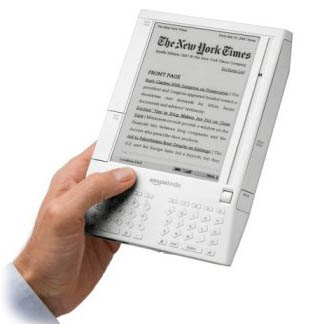
I've read several articles and heard multiple podcasts bash the Kindle, and I'm pretty tired of it. I don't own a Kindle, but playing with it for a bit was enough to sell me on it. The first thing wrong with all these "pundits" writing off the Kindle is that they're often not the target audience. Not everyone loves reading, and that's ok. The Kindle is designed for people who love reading. It's not designed to be a super sexy gadget like the iPhone or the Pre or anything like that - it's meant to be as functional as possible. I feel like we've entered a world of gadgets where style taking precedence over substance helps sales, and it sells some reporters on the devices, as well. I don't want to discredit all people that review gadgets, that's just an observation I've made about some of them. I haven't heard anyone who has a Kindle and enjoys reading tell me that they hate it or regretted getting it.

The real point I want to make is that a lot of the best technology starts out unpopular. Do you know why MSN was so late to the game with it's Internet services and web portal? Because Microsoft thought that the Internet was a fad (it's pretty hard to find a citation for this, but he definitely said something to the effect of "The Internet? We're not interested in it"). When most people hear MSN now they probably think of MSNBC, whereas the ISP didn't do all that hot (competing with the likes of AOL and Earthlink) and the web portal never caught up to Yahoo, which never caught up to Google, and the rest is history (although MSN is still around). Nowadays, the odds are slim to none that you'll go through your day without directly or indirectly interacting with the Internet. Our lives basically revolve around it, but I'll get back to this point.

There are a couple of other great examples of technologies that people mocked early on. When Jeff Bezos invented e-Commerce in 1994 with Amazon.com, people thought he was out of his mind. Why would people want to buy stuff online they could drive to their store and get instantly? Why would you buy a book that you can't flip through in a bookstore? And yet, here Amazon stands as a formidable force in retail in the U.S. with a growing presence across the world. The people who doubted Jeff Bezos weren't stupid, they just weren't thinking ahead that far. The DVD format was seen as ridiculous since it required a new player and the discs cost more without a very big jump in quality as far as most people were concerned, and yet now almost every house has a DVD player. Heck, just a couple of years ago pundits thought that the iPhone was prohibitively expensive and no one would want to pay that much money for a smartphone without a keyboard. I think we all know what happened there.

The lesson to be learned here is that you can't believe what you hear in mainstream media - take it with a grain of salt. The common thread is that the doubters weren't forward thinking. The iPhone provided so much value and gave people such a rich experience that price just wasn't an issue to them. The Kindle is expensive, and yet people are still buying them. I don't need top secret information to know that - I see them outside on the bus and at the gym. Amazon sold out of them this past winter. If you don't want to believe that, you have to believe that 35% of sales on all books that have a Kindle edition are that Kindle edition. Books are the bedrock that Amazon.com was founded on, so 35% of a book's sales being for the Kindle is a pretty big deal. As much as all these journalists want to naysay, people aren't being deterred.


So why are people paying so much for a device that serves a single function? In a way, I think it serves a lot of functions. Not to sound like a broken record, but we live in an information society. Think about that for a second. The amount of knowledge we have available instantly at our fingertips has grown dramatically in the past couple of decades. I'd posit that people are actually becoming smarter because even though they haven't to remember less stuff overall since they can always just look it up, they also look up and learn more stuff because they can. We know names of random actors and actresses because of IMDB. Small underground artists are building worldwide fanbases through digital distribution. Let's face it, books aren't as portable as we'd like to think. If we want to read multiple books, we have to carry them in a bag. If you're a student - this really sucks (especially math and science texts). The Kindle not only lets you carry all these books in a thin, easy to carry package, but you can get leverage the Internet to get books directly onto it. Past that though, you can highlight and make notes without damaging the book, and you have more room than just the margins. Plus, you can define words you don't know on the fly (context clues don't always work), and having that kind of power for younger students can really encourage their thirst for knowledge.

If I'm not convincing you by now then maybe I'm just not explaining it right, but the Kindle is an improvement on a dying technology. People just don't have a whole lot of free time anymore. We wait around a lot, or ride public transit, or do other random things where we happened to be free, but it's not really free time. That's why carry mp3 players to fill that time. Books often lose the battle for our time because they're just not as convenient as carrying your iPod. If a Kindle is portable enough to carry to a gym, then it's portable enough for most anything. I fully understand that people love the feel of books, but people love the feel of CDs and yet they're still around while mp3s are popular. Why can't the same be true for books? I think books will die off in favor of digital copies some day, but that's a really long time from now. The Kindle may be a bit ahead of its time, but it's going to take a while for it to really catch on because an e-Reader is such a radical concept. Amazon has just done well because they have the online book store with access from where ever.

As for price: the first iPod and iPhone were expensive at first, too, but the price went down. Same with HD TVs, DVD players, personal computers, laptops, etc. It's going to be a while. For college students, the cost of a Kindle DX amortized over 4 years would easily be cheaper than real textbooks if the cost of these books were maybe half (even without the ability to re-sell books). For grade schools this could put a huge dent in their budgets if they could give each kid one of these and pay less for books (plus the drop in administrative costs if they could be managed remotely). The possibilities for education are really endless, and it's really a lot easier to study if your books are always with you in a portable device. I know I would've gotten more done.

Ok, I think I've gone on long enough. I hope that thoughts haven't been all that scattered, I just feel like I need to stand up for the Kindle because I honestly believe in it. I think that Amazon has been really smart so far in its diversification of not only its stores and acquisitions but also AWS, and I think that the Kindle is another key cog in its future (much like when Apple jumped into mp3 players and cell phones, which ended up re-vitalizing the Mac). The Kindle vision is "every book, every made, in any language, available in under 60 seconds". That vision is immensely inspiring. It feels pie in the sky, but it is possible. I think that alone should be enough to sell people on the idea of the Kindle being the future of reading. The idea of having the entirety of human knowledge available at your fingertips in under a minute is priceless. The Internet has taken us on that path, but it doesn't have the full text of every book every made in any language. The point I really want to get across is that we're at the forefront of an entirely new industry, much like digital music when Napster got big or the beginning of the end of broadcast television as we know it when Hulu came out - savor the moment. Don't buy into the hype and don't buy into the cynics, just be reasonable. That's all I ask.

Microsoft vs. Apple Ads

The advertising war between Microsoft and Apple is alive as well. It was pretty lopsided for a while, probably partially because Microsoft didn't want to seem like it was bullying an underdog, but Apple pushed too hard and woke the sleeping giant. The latest spin out of Redmond (aside from the commercials where people buy cheap PCs) is that it costs $30,000 to fill an iPod. The reason they can get around this with the Zune is that it's subscription-based, which has the advantage that for $15 a month you get all you can eat music plus you can keep 10 of them each month. Anyway, I still thought that this was kind of a stupid tactic from Microsoft, but meanwhile Apple came up with an attack that you couldn't get a PC without the stuff people hate about computers.

Which is a more ridiculous ad? The answer is that they're equally crazy. You may think that the Zune one is more dumb because most people already have a library of CDs and music to fill up their mp3 player with, but the Mac ad doesn't make any sense. Macs aren't as stable as people think they are - if you use certain software you will see crashes. I used iMovie for few months on a Mac Pro last spring and it crashed almost each time I used it. There are definitely security vulnerabilities for Macs, too, and it totally ignores the inflated price of a Mac. I'm not saying that Macs are bad computers, but these ads are slinging mud. They know that people won't fact check, but they're not quite slanderous so Apple can get away with them. My point is simply that when Microsoft comes up with ads like this Zune one, just remember who cast the first stone.

I have one more thing to slip in here: Google started airing a Google Chrome ad created internally by Google Japan just for fun. It's interesting that they care this much about Chrome (what's their master plan?) and that they're using a competing advertising venue to sell themselves.

Facebook's Funny Money

Ok so they don't really call it funny money, but I still can. Facebook is toying with an idea that's certainly not inventive, but it could definitely help them get on the track of a successful business model. They're testing a payments system with developers where virtual money can be used between applications to buy and sell virtual (or I suppose even physical) goods and services. It would make buying stuff easier and safer (like getting a wristband of money at a water park), and Facebook taking a cut of the transactions could help them replace/supplement their oft controversial advertising model with something less obtrusive. I don't really know if it'll work because I don't know if people will really trust Facebook with their money or want to buy what third party developers offer, but I'm definitely anxious to see what happens.

Meanwhile, their employees are going in the opposite direction: having imaginary money turned into real cash. Facebook has sought funding (to the tune of $150 million) from private investors to buy back their employees' stock to keep loyal employees around who have been chomping at the bit for a cut of the profits they were promised but haven't come to fruition quite yet. Won't people leave if they get rich off their stock? More importantly though, isn't this a dangerous financial decision? $150 million seems like a lot of money to bet if they don't come up with a good business model before their star burns out. I hope they know what they're doing.

Final Notes

Aside from being tired from today (didn't sleep enough last night), I think you're tired of reading this post by now (assuming that anyone is actually still reading this). Let me link you to a few other interesting tidbits before I send you on your merry way:

Google has launched a search options feature to try to get themselves closer to real-time search. They're actually pretty nifty.

The CEO of Sony Pictures admitted that he doesn't see anything good as having come from the Internet. You don't have to scroll up very far to get my opinions on the glory of the Internet, but it goes to show how backwards the movie industry can be and why licensing for TV shows and movies and their related properties is so wacky. If their CEO is living in the past then how can they hope to have a future?

The judge in the Pirate Bay trial has been under fire recently for having been involved in a pro-copyright association in Sweden (which he claims didn't bias him), but now they're starting to discover that his appointment may not have been random (as is supposed to be the case in Sweden). The plot thickens! Will it be called a mistrial?

Smashing Magazine has a really well-written article on how to optimize your website's conversion rates with usable designs, and it's full of pretty pictures. I love the concepts they point out here, and I think it's worth a read if you're interested in usability at all.

Coldplay is releasing their live album for free. Enjoy.

I hope you all have a great week! I think I'm going to spend my nights trying to learn how to play this.

Sunday, March 22, 2009

The Great Buck Howard

The Great Buck Howard Review

I don't know how they pulled this off, but HD Movies got exclusive rights last week to air The Great Buck Howard on television a full 3 days before it came out in theaters nationwide, so I thought I might as well give a short review of it (as I like to do when I see movies so close to the release date). As a side note: I saw Vicky Cristina Barcelona last weekend and liked it a lot! It's worth seeing if you're ever looking for something to rent.

The basic premise of the movie is pretty simple: Colin Hanks's character (Troy) is in law school because his father (real-life dad Tom Hanks) pressured him into it, but he hates it and ends up answering a call for a road manager for the Great Buck Howard (John Malkovich) - a somewhat self-satisfied magician ("mentalist") who has been performing for some 40 years but only gets half empty venues in small towns now.

I never really felt compelled to continue watching the movie other than I was trying to figure out where the story was going. The overall message of the movie was pretty clear in the end, but for a while the movie ostensibly seems to go nowhere. Still, for going nowhere it ends up being pretty entertaining. It's called a "show biz comedy", but it's a very dry comedy and could almost qualify as a dramedy. Unlike Tropic Thunder, the last show biz comedy in recent memory, it wasn't littered with stupid inside jokes. John Malkovich definitely shines overall and is almost like a Michael Scott (from The Office I mean) - you develop a real love/hate relationship with him. Colin Hanks is, well, Colin Hanks. I was surprised that I found myself liking the inclusion of Emily Blunt - the romantic angle in the story wasn't prolonged and never distracted the film from its main plotline, and I really dug that.

I wouldn't seek out this movie right now in theaters, but I think it's a very solid B movie and a great rental. There's nothing really bad about it - the only thing is genuinely struggles with is getting you to care about the movie. The cameos are pretty fun, the script is quirky, and it's a worthwhile way to spend 90 minutes.

Computer Science Back in Style

According to a recent study (i.e. take it with a grain of salt), enrollment in Computer Science in the U.S. increased last year for the first time in 6 years (so around the burst of the .com bubble) - 8.1%. That may not sound all that significant, but the industry has been importing talent from abroad because they're just not finding enough of it domestically, so this is great. Technology is a pretty resilient industry overall, so even though things are down now there are still companies hiring right now and there will be more than ever at the end of this downturn. The class of 2012 should definitely be pretty well off as far as entering the job market. Some people are attributing it to the "coolness factor" of social networking and others to the iPhone, but I think that there was a big uptick in CS jobs leading up to last year and I had friends in other science majors who were jealous of all the choices we had, so I can see the job market having a huge influence on this rise. Unfortunately, female enrollment only stayed about steady, but hopefully the industry continues efforts to encourage women to give C.S. a shot.

IE8 and Chrome 2.0

A goliath browser and a newcomer to the market both saw fresh releases last week. Internet Explorer 8 was available on Thursday and boasts improved security, much improved tab management, and a better address bar (akin to the Firefox omnibar or the Chrome awesome-bar). From what I can tell, a lot of the new features have been around in Firefox for a long time by way of well-established extensions (although some are native to Firefox). For example, IE8 considers new tabs opened from one tab being colored the same to be a new feature, but some Fireefox power users have had this for a long time. There are two fresh features that I find interesting though. One is the concept of Accelerators, which is basically a mashup that allows you to plug text on a page into certain services to enrich the content (e.g. map an address or get pictures of a celebrity by right clicking on some text). The other is the idea of having Web Slices on a page, which can alert you when they change without having to have a tab open for it (like weather or stocks). Security-wise, it sounds like the anti-phishing feature is good and its attempt to restrict sites from gathering private information about you. It also tries to highlight the domains of the URLs you visit so that you don't get tricked too easily to visit a fake bank website or something, and gives you an impressive view of your cookies. It's a strong release compared to IE7 and it's finally approaching the point where it's in the same neighborhood of Firefox, but Firefox users have no reason to switch to it. However, if you're actively using IE7 then you should really upgrade - it's much better.

I don't know if anyone is still using Chrome, but Google made a 2.0 beta of their browser and it's actually much less impressive than the IE 8 upgrade, if you can imagine that. The feature list is thin with the main reason to try it out being a faster Javascript rendering engine and full page zoom. It doesn't look like people have anything to look forward to in the final 2.0 release.

Shuffle Lockdown and the iPhone Event

I talked about my disdain for the 3rd generation iPod Shuffle last week, and I had a hunch about this story but didn't want to talk about it until it was confirmed, which it now is. The headphones for the new Shuffle have a proprietary chip, which means that you can't use any other headphones on it if you want to be able to control it at all since the bloody thing has no buttons. The communication with the Shuffle isn't encrypted, so the chip could theoretically be cloned, but I think that legally you have to pay licensing fees to Apple to be able to sell your own headphones. I'm guessing that Apple figured people wouldn't like this if they're still selling the 2nd generation Shuffle for $50 (although they're trying to screw you in that you're paying $30 less for 1/4th of the capacity).


In better Apple news, they had an event last week to preview the forthcoming iPhone 3.0 software update, which includes copy/paste (it only took them 2 years, imagine that). They claim the software will support tethering, though individual carriers may not. The feature list also includes MMS (finally), voice memos, better searching (you can search all your data on your iPhone), P2P connectivity (for playing games with other iPhones), push notification for 3rd party applications, support for paid subscription services within 3rd party applications, and being able to send multiple pictures at once. Other than that, they went over a bunch of games and other apps, including health-related applications (like taking blood pressure using a peripheral) and multimedia streaming (like watching ESPN content live). They also made it clear they're not interested in supporting background processes, which is kind of disappointing but their reasoning is that it often eats too much battery life. It was a pretty long presentation overall, but I think this is actually a pretty solid release and 3rd party developers ought to be pretty thrilled. Oh, and here's a video of cut/copy/paste and some of the other new additions in action. They claim doing cut/copy/paste was hard, but the fact that they were willing to let a hard problem stretch for nearly 2 years shows their disregard for what their customers ultimately want. Anyway, it's a feature that still seems like it could use some polish. Overall, I think people will be pleased with this release.

Botnets and Trojans

If your computer gets infected as a zombie in a botnet, it basically becomes the slavish follow of some hacker living in his mother's basement. It logs on to an IRC channel, in secret, and accepts encrypted messages from its master to send spam or steal your data or help in coordinated attacks without leaving a trail to the progenitor of the evildoings. So how do you know if you're in one? If you're Internet connection seems inexplicable slow, go to the task manager and see what's hogging up your bandwidth. If you don't recognize it, you're probably in a botnet. There's also software out there to passively look for your being in a botnet, and some spyware scanners (like Spybot and Ad-aware) may be able to sniff it out depending on how you were swindled into the network. The important thing is that you stay vigilant.

If you ever wondered how a trojan virus works, Megapanzer has a great, concise write-up on the various stages of the highly popular breed of infection. In a nutshell, there's a dropper that implants the malicious code where ever the vulnerability on your system is and binds it to an entertainer file to hide the true purpose of the file, and then it tries to spread itself, and then the damage routine that the dropper planted is executed on restart. It may then delete itself once the damage is done to avoid detection. Fun stuff, huh? As sickening as some of these viruses and worms and phishing attacks are, a small part of me can't help but admire the amount of skill it requires to come up with some of these things. If only they used their power for good rather than evil.

I'm going to sneak one more thing in here: in turns out that the TV industry is losing a ton of money to satellite piracy. I never knew that it was such a big deal, but apparently it has become very damaging in Canada, among other places (on the order of 10% of satellite households in North America being illicit).

Terrible PC Hardware Support

A columnist at humor site Cracked.com did a very true, though somewhat funny, piece comparing his tech support experience with a Dell XPS (one of Dell's top computer lines) versus with a PowerBook. I actually laughed for a while after reading his short transcription from talking to the Dell support guy, who was in India (I'll let you read it rather than spoiling it). It seemed like the people he worked with on either side were incompetent, although the turnaround time was shorter for his Mac because he happened to have an Apple store near him. I'm kind of surprised at the state of customer service nowadays, especially with computers. Here's a device that is not at all intuitive right out of box and should come with a giant instruction manual and a class to use for security reasons alone. Yet, no one seems to get customer service right relying on nonsensical scripts rather than trying to enhance the customer experience.

Final Notes

Ok, I've blabbered on quite long enough. Let's get to the quickfire round, shall we?

The founder of IMDb was at South by Southwest (SXSW) and mentioned that their vision is to offer streaming for every title on the site, which is a pretty lofty goal that a lot of people took very kindly to. People at Amazon definitely think big, so I'm pretty sure he's being genuine about it.

A former Googler wrote a little blurb about his 3 years at Google working on visual design and how he hated the nit-picky discussions he ended up finding himself in. Maybe this partially explains the UI problems people have historically faulted Google for.

Gmail Labs created an undo send option, which I think is pretty cool. In fact, I think they should purposely delay sending e-mails by maybe 30 seconds for people who decide they're too jumpy on e-mails (or just hit the wrong button too often).

Nine Inch Nails, in their typical awesome fashion, released a tour pack of music for free on their site with tracks from themselves, Jane's Addiction, and Street Sweeper. Their experiment last year with Ghosts ended up earning them a lot of money, so surely they're hoping for heightened tour sales this time around.

Google recently started displaying ads based on your browsing history, so you should probably read this if you want to opt-out.

Lastly, one blogger took it upon himself to apply the psychology concept of the 4 stages of competence to programming. I'd like to think that I'm at stage 3.

Hope everyone has a fruitful week!